
 English
 中文简体
中文简体Why Pin Type Transformers Have Become the Core SKU in Precision Manufacturing for Low-Frequency Transformer Factories
2026-05-29
Content
- 1 Structural Characteristics of Pin Type Transformers and Precision Adaptation of EI Cores
- 2 Certification Barriers for Pin Type Transformers and Process Thresholds for Low-Frequency Transformer Factories
- 3 Automated Production of Pin Type Transformers and Pin Precision Control
- 4 Market Applications of Pin Type Transformers and Capacity Layout of Low-Frequency Transformer Factories
- 5 Future Trends of Pin Type Transformers and Technical Iteration for Low-Frequency Transformer Factories
Within the segmented product lines of low-frequency transformer factories, pin type transformers have emerged as one of the highest-volume SKUs due to their standardized pin-through-hole structure, minimal assembly interface, and highly modular packaging format. Data shows that approximately 850 million pin type transformers enter PCB assembly processes globally each year, with over 62% flowing into home appliance control boards, industrial power modules, and communication equipment. For professional transformer factories, the core value of pin type transformers lies in their ability to convert traditional low-frequency transformer coil windings and EI cores into standalone components that can be directly inserted into circuit boards, significantly reducing secondary processing costs for end customers.
Structural Characteristics of Pin Type Transformers and Precision Adaptation of EI Cores
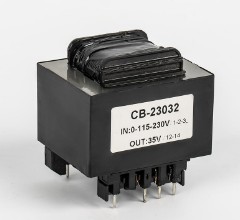
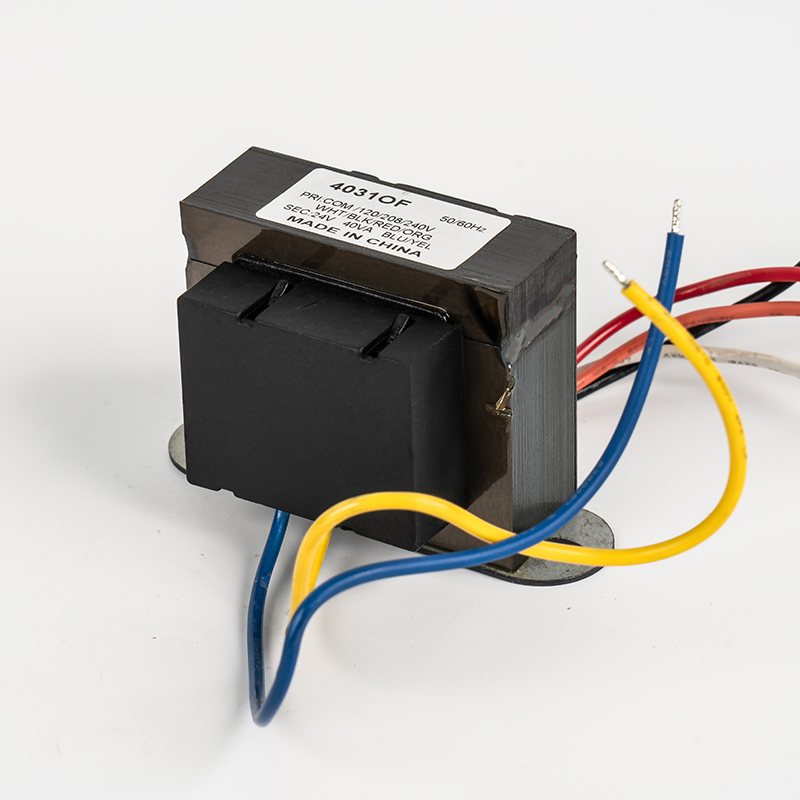
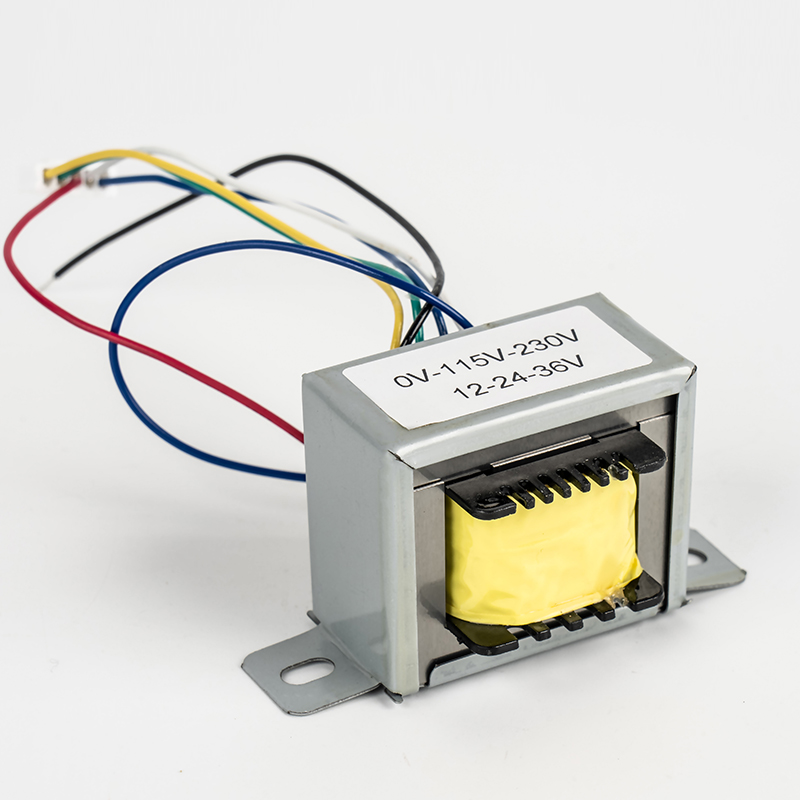
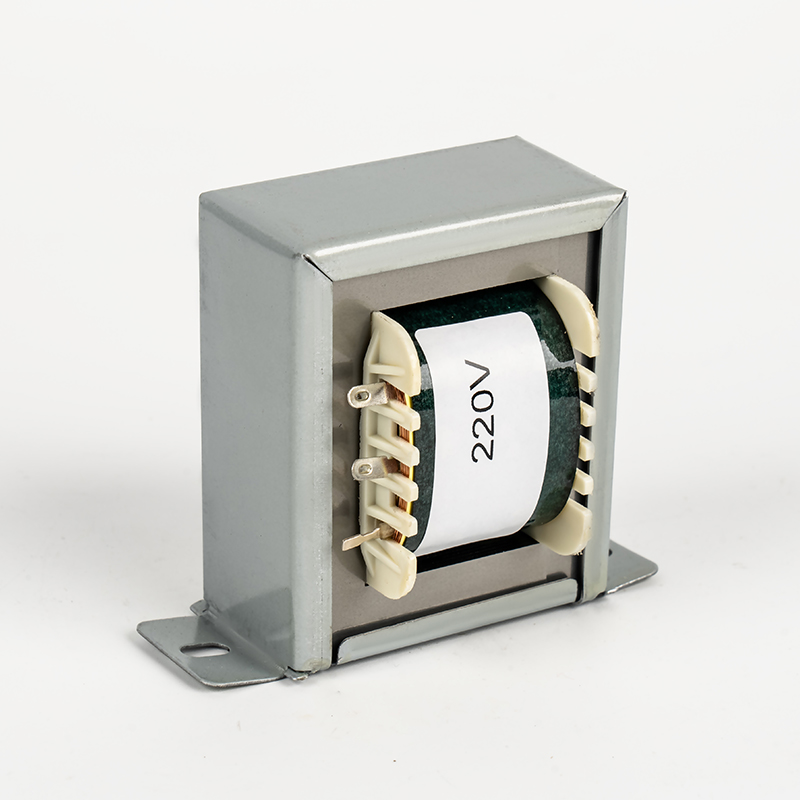
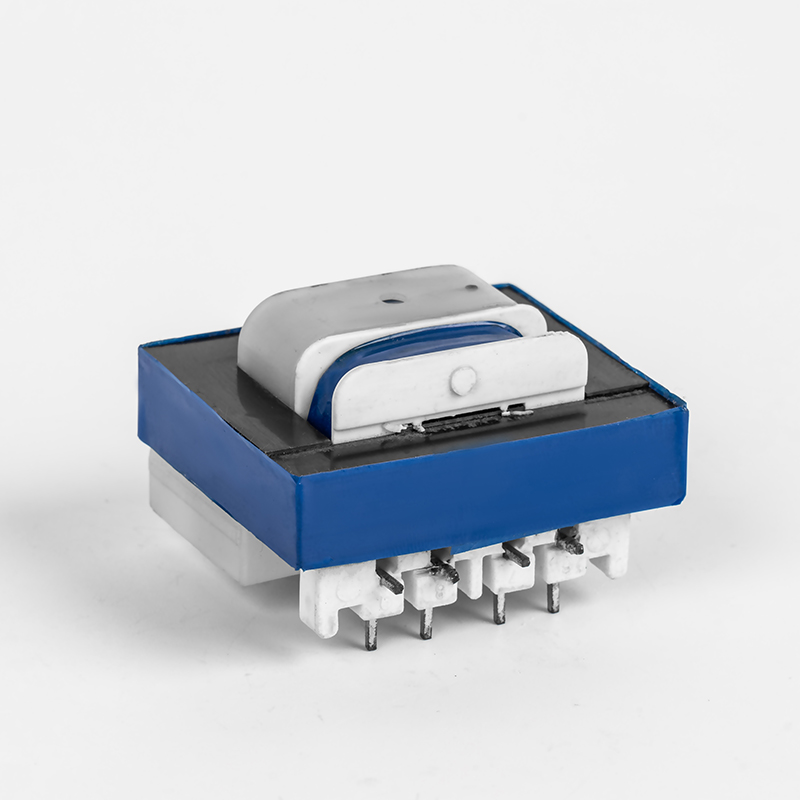
Pin type transformers universally adopt low-frequency power-frequency design, with operating frequencies locked at 50Hz/60Hz. Their structural core consists of three parts: EI-type core, bobbin winding, and metal pins, where pin spacing follows standardized grids of 2.54mm (0.1 inch) or 5.08mm (0.2 inch) to ensure full compatibility with universal PCB drilling templates. This design enables EI transformer factories to upgrade traditional low-frequency transformers from "loose components" to "plug-and-play" standard electronic elements.
Common EI Core Specifications and Pin Configurations for Pin Type Transformers
| EI Core Model | Rated Power (W) | Pin Count | Pin Pitch (mm) | Typical Applications |
|---|---|---|---|---|
| EI28 | 1.0 - 3.0 | 4 - 6 | 2.54 / 5.08 | Small Appliance Control Boards, Sensor Power |
| EI35 | 2.0 - 8.0 | 6 - 8 | 2.54 / 5.08 | Smart Plugs, Thermostats, Relay Drivers |
| EI41 | 5.0 - 15 | 6 - 10 | 5.08 | Air Purifiers, Humidifier Main Control Boards |
| EI48 | 10 - 35 | 8 - 12 | 5.08 | AC Indoor Unit Control Boards, Microwave Power |
| EI57 | 25 - 80 | 10 - 14 | 5.08 / 7.62 | Industrial Controllers, Security Device Power Modules |
As shown in Table 1, transformer factories can cover the full spectrum from milliwatt-level sensors to multi-watt industrial controllers simply by combining different EI core sizes with pin configurations. Pins typically use tin-plated copper or nickel-plated steel, with standard diameters of 0.6mm, 0.8mm, and 1.0mm, capable of withstanding insertion and extraction forces of 5N to 15N without deformation. This mechanical reliability is difficult to achieve with surface-mount transformers—the latter may be smaller in volume but are prone to solder joint cracking in high-vibration environments.
Certification Barriers for Pin Type Transformers and Process Thresholds for Low-Frequency Transformer Factories
As key components directly soldered onto PCBs, pin type transformers face more stringent certification requirements than ordinary low-frequency transformers. Home appliance applications require CQC product certification and ROHS environmental certification; pin type transformers exported to the EU must also comply with REACH regulations restricting phthalates and other plasticizers; the North American market requires UL certification covering pin spacing, creepage distance, and dielectric withstand tests.
Special Certification Requirements for Pin Type Transformers
- ROHS environmental certification requires pin plating lead content below 1000ppm, with lead-free solder compatibility testing through 260°C/10 seconds reflow simulation
- CQC certification pin pull tests require individual pins to withstand ≥10N axial tension for 10 seconds without loosening, and torque tests must withstand ≥0.5N·m rotational force
- UL certification specifies minimum creepage distance between primary and secondary pins of ≥6.4mm (at operating voltage ≤250VAC), with clearance distance ≥4.0mm
- Dielectric withstand tests must apply 3000VAC for 1 minute between primary and secondary pin groups, with leakage current below 5mA and no breakdown or arcing
These certification barriers shut out numerous small workshop-style low-frequency transformer factories. Data shows that fewer than 150 transformer factories in China possess full certification qualifications for pin type transformers, and only 20-plus scaled enterprises achieve annual production capacity exceeding 30 million units. Certification credentials have become the core competitive barrier for low-frequency transformer factories in the pin type transformer segment.
Automated Production of Pin Type Transformers and Pin Precision Control
The core competitiveness of pin type transformers lies in pin positional accuracy and consistency. PCB automated placement or wave soldering equipment typically requires pin spacing tolerances of ±0.1mm; exceeding this range leads to insertion failures or cold solder joints. Currently, leading low-frequency transformer factories have deployed CNC automatic winding machines, automatic pin insertion machines, and online vision inspection systems, minimizing human intervention.
Key Processes and Precision Indicators for Automated Production Lines
| Process | Equipment Type | Key Control Points | Precision/Pass Rate |
|---|---|---|---|
| Winding | CNC Six-Axis Winding Machine | Turn Accuracy ±0.5%, Wire Arrangement Flatness | ≥99.5% |
| Pin Insertion | Automatic Pin Insertion Machine | Pin Spacing Tolerance ±0.05mm, Perpendicularity ±0.3° | ≥99.8% |
| Impregnation | Vacuum Pressure Impregnation Tank | Vacuum ≤-0.095MPa, Pressure Hold Time ≥30min | ≥98.8% |
| Vision Inspection | AOI Optical Inspection System | Pin Coplanarity ≤0.1mm, Spacing Deviation Detection | 100% Inspection |
| Electrical Test | Online Comprehensive Tester | Full Inspection: Withstand Voltage, Inter-Turn, No-Load, Load | 100% Inspection |
Data in Table 2 demonstrates that EI transformer factories, through layer-by-layer screening with automated equipment, can control pin positional defect rates below 30ppm. For an annual output of 50 million pin type transformers, total annual pin deviation defects would not exceed 150 units—sufficient to meet the stringent incoming consistency requirements of automated placement lines.
Market Applications of Pin Type Transformers and Capacity Layout of Low-Frequency Transformer Factories
Downstream applications for pin type transformers are highly fragmented, but concentration is increasing. Home appliance control boards remain the largest demand segment, accounting for approximately 38%; industrial automation and security monitoring combined account for 27%; smart lighting and IoT devices show the fastest growth, with annual growth rates exceeding 15%. This diversified demand structure requires transformer factories to possess rapid product specification switching capabilities—the same automatic pin insertion machine must complete mold changeover from EI35-6-pin to EI48-10-pin within 30 minutes.
Capacity Distribution and Flexible Manufacturing
Global pin type transformer capacity is highly concentrated in China's Yangtze River Delta and Pearl River Delta regions. Ningbo, Zhejiang, leveraging the logistics hub advantages of the Hangzhou Bay Bridge, has formed a complete industrial chain cluster spanning bobbin injection molding, pin stamping, to finished product testing. Transformer factories within this region can compress delivery cycles to 5 to 7 days—over 50% faster than inland factories. Flexible manufacturing capability is the core competitiveness of pin type transformer factories—through modular mold design and quick changeover systems, leading factories can complete the full process from order confirmation to first-piece delivery within 48 hours.
From a customer structure perspective, the top ten customer concentration ratio for pin type transformer orders is approximately 45%, lower than bulk categories such as air conditioner transformers. This fragmented characteristic reduces the risk associated with losing a single major customer, but also requires low-frequency transformer factories to establish more extensive SKU management systems. Leading transformer factories have deployed ERP and MES integration systems, achieving full lifecycle traceability for over 2000 pin type transformer specifications.
Future Trends of Pin Type Transformers and Technical Iteration for Low-Frequency Transformer Factories
As smart home devices continue to shrink in size and PCB space becomes increasingly tight, pin type transformers are facing pressure to transition from "through-hole" to "low-profile" or even "surface-mount" formats. Traditional pin type transformers typically have heights between 15mm and 35mm, while new-generation ultra-thin home appliances require transformer heights compressed below 10mm. This trend drives EI transformer factories to innovate simultaneously across three dimensions: core materials, winding processes, and packaging formats.
Three Main Lines of Technical Evolution
- Ultra-Thin Profile: By adopting thinner silicon steel sheets (0.23mm replacing 0.35mm) and flat bobbin design, reducing EI48 pin type transformer height from 28mm to 12mm while maintaining 15W rated power output, adapting to ultra-thin AC remote controls and smart switch panels
- High Integration: Integrating peripheral components such as fuses, varistors, and rectifier bridges within the same package as the pin type transformer, reducing PCB footprint by over 40%. Leading transformer factories have already launched "transformer + fuse" two-in-one modules, requiring only 2 to 4 additional pins to implement overcurrent protection functionality
- Environmental Compliance: The EU Ecodesign 2023 regulation requires standby power consumption below 0.3W, driving pin type transformer no-load losses from traditional 1.5W to below 0.8W. This requires low-frequency transformer factories to adopt high-flux low-loss silicon steel and optimized magnetic circuit design, reducing no-load current by 45%
These trends impose new capability requirements on low-frequency transformer factories: not only mastery of traditional EI lamination and pin insertion processes, but also cross-disciplinary competencies in electronic component integration design and environmental material application. Over the next five years, comprehensive transformer factories capable of simultaneously providing standard pin type transformers, ultra-thin pin type transformers, and integrated power modules will occupy more favorable ecological positions within the smart home and industrial IoT supply chains.


Welcome To CHUANGBIAO
Address : No.420-3, Sanbei East Road, Guanhaiwei Industrial Zone, Cixi City, Ningbo, Zhejiang, China
Contact
- Tel: +86 186 6825 0703
- Email: linjian@nbcbdz.com
About us
Products
Copyright © Ningbo Chuangbiao Electronic Technology Co., Ltd.
All Rights Reserved. EI Transformer Manufacturer


