
 English
 中文简体
中文简体What Makes EI Pin Type Transformer the Preferred Choice for PCB Power Solutions
2026-06-05
Content
- 1 Core Value and Positioning of EI Pin Type Transformers
- 2 Magnetic Circuit Engineering Principles of EI-Type Cores
- 3 Engineering Details of Pin Terminal Systems
- 4 Insulation System and Safety Protection
- 5 In-Depth Analysis of Performance Parameters
- 6 Application Scenarios and Selection Strategies
- 7 PCB Integration Design Guidelines
- 8 Manufacturing Process and Quality Control
- 9 Fault Diagnosis and Maintenance Strategies
- 10 Market Trends and Technology Evolution
Core Value and Positioning of EI Pin Type Transformers
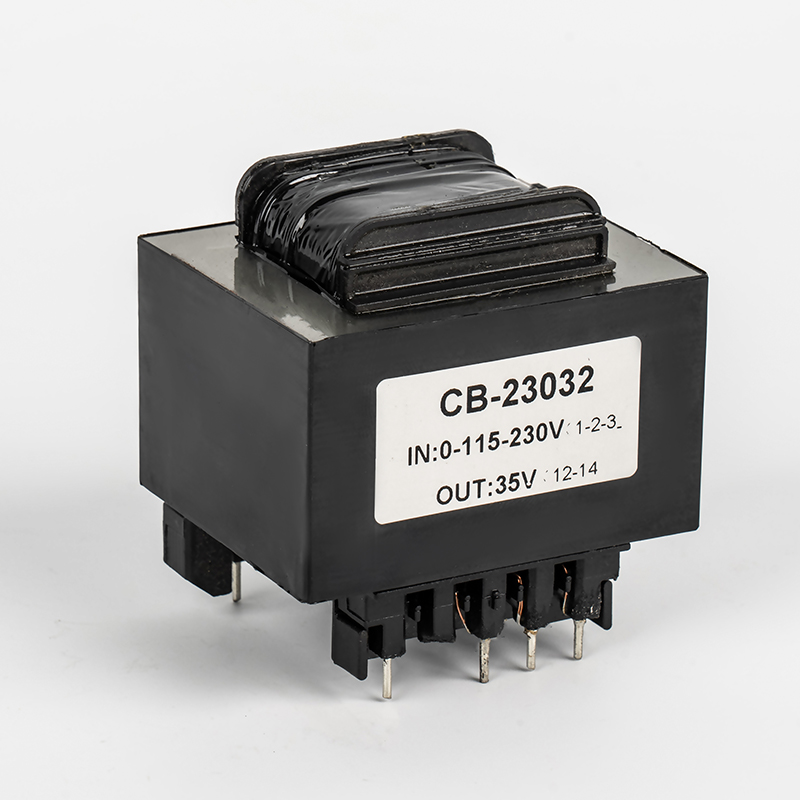
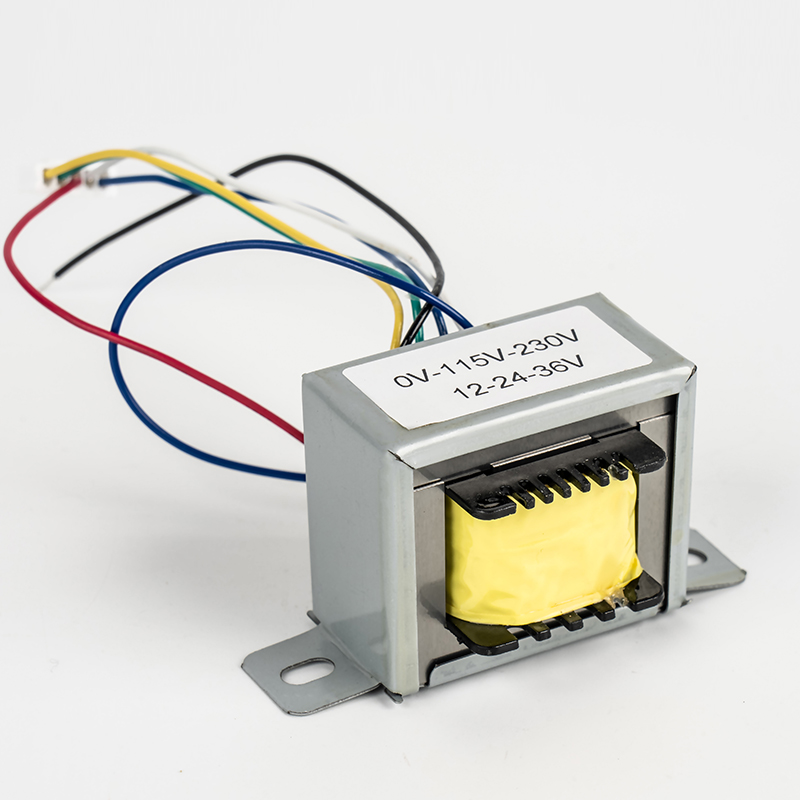
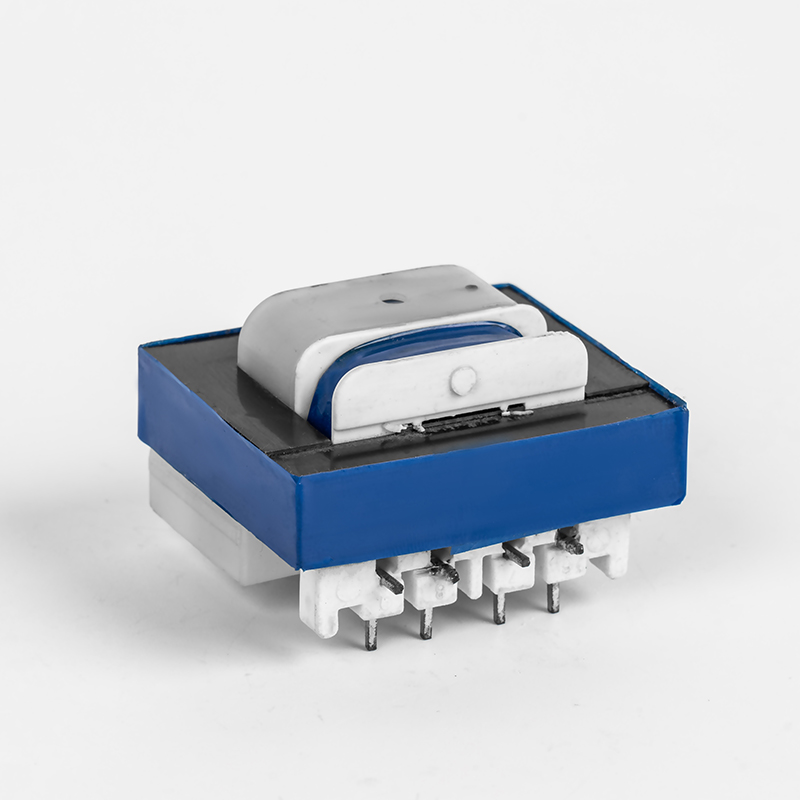
The EI pin type transformer represents one of the most standardized product forms in the low-frequency power conversion domain. It adopts the classic EI-type laminated core structure and achieves direct soldering installation onto PCB circuit boards through standardized pin terminals, completely eliminating the redundant design of wiring harnesses, connectors, and excessive space occupation found in traditional lead-wire transformers. This configuration is widely deployed in consumer electronics, industrial control, medical equipment, and communication systems, with power ratings spanning 1VA to 1200VA, input voltage compatibility with 110V, 220V, and 380V power frequency grids, and output voltages customizable from 6V to 220V. For equipment manufacturers pursuing automated production, high assembly density, and long-term operational reliability, the EI pin type transformer offers the optimal balance between cost and performance.
Magnetic Circuit Engineering Principles of EI-Type Cores
Lamination Structure and Flux Distribution
The EI core is constructed from interleaved E-shaped and I-shaped silicon steel laminations, forming a closed magnetic circuit. The center leg of the E-shaped lamination carries the main magnetic flux, while the side legs serve as the flux return path, and the I-shaped lamination closes the top of the magnetic circuit. Compared to toroidal cores, the EI structure offers a larger window area, facilitating multi-layer windings and insulation layers while providing shorter heat dissipation paths. Silicon steel thickness typically ranges from 0.35mm to 0.5mm; when using high-grade oriented silicon steel such as Z11 or Z9, core losses can be controlled below 1.5W/kg under 1.5T/50Hz conditions. Laminations are treated with insulating varnish to reduce eddy current losses, and the overall no-load current is approximately 5% to 15% of the rated current.
Specification Series and Power Correspondence
| Core Model | Stack Thickness Range (mm) | Typical Power (VA) | Dimensions (mm) | Application Scenarios |
| EI28 | 20-35 | 1-5 | 28x24x22 | Small instruments, sensors |
| EI35 | 25-45 | 3-10 | 35x30x28 | Consumer electronics, LED drivers |
| EI41 | 30-55 | 5-20 | 41x35x32 | Appliance control boards, security hosts |
| EI48 | 35-65 | 10-30 | 48x40x38 | Industrial controllers, PLC modules |
| EI57 | 40-80 | 30-50 | 57x48x45 | Medical equipment, power adapters |
| EI66 | 50-100 | 50-100 | 66x57x52 | Industrial power supplies, servo drives |
| EI76 | 60-120 | 100-150 | 76x65x60 | High-power control cabinets, UPS |
| EI96 | 80-160 | 200-400 | 96x82x78 | Machine tool control, welding equipment |
| EI114 | 100-200 | 400-800 | 114x98x92 | Power distribution, large instruments |
| EI133 | 120-250 | 800-1200 | 133x115x108 | Industrial rectification, special power supplies |
Magnetic Saturation and Temperature Rise Control
The saturation flux density of EI cores typically ranges from 1.5T to 1.8T. The design operating point should maintain a 15% to 20% margin to prevent magnetic saturation caused by sudden grid voltage spikes. Temperature rise primarily originates from core losses and copper losses; core losses are proportional to the 1.3 power of frequency and the 2.5 power of flux density, while copper losses are proportional to the square of load current. Under Class B insulation rating (130 degrees Celsius), the winding temperature rise limit is 80K; under Class F (155 degrees Celsius) it is 100K; and under Class H (180 degrees Celsius) it is 125K. In practical design, maintaining full-load temperature rise within 70% of the limit significantly extends insulation lifespan.
Engineering Details of Pin Terminal Systems
Pin Types and Material Specifications
Pin terminals represent the defining characteristic that distinguishes pin type transformers from other mounting forms. Common types include: straight pins (perpendicular to the PCB plane, suitable for through-hole soldering), bent pins (90-degree bend, suitable for horizontal mounting or low-clearance spaces), square pins (rectangular cross-section, high torsion resistance), and special-form pins (custom angles or lengths, adapting to special PCB layouts). Pin base materials are C11000 oxygen-free copper or C10200 tough pitch copper, with conductivity exceeding 100% IACS. Surface treatments include tin plating (melting point 232 degrees Celsius, suitable for wave soldering), nickel plating (high hardness, excellent wear resistance), and silver plating (lowest contact resistance, suitable for high-frequency signals). Pin diameters range from 0.6mm to 1.5mm, with tensile strength no less than 200MPa and insertion/extraction life exceeding 500 cycles.
Spacing Standards and PCB Compatibility
| Spacing Type | Standard Value (mm) | PCB Grid | Applicable Cores | Soldering Process |
| Narrow Pitch | 2.54 | 100mil | EI28-EI35 | Hand soldering, selective wave soldering |
| Standard Pitch | 5.08 | 200mil | EI35-EI48 | Wave soldering, reflow soldering |
| Wide Pitch | 7.5 | 295mil | EI48-EI66 | Wave soldering |
| Large Pitch | 10.16 | 400mil | EI76-EI96 | Wave soldering, robotic soldering |
| Custom Pitch | As required | Non-standard | Full series | Depends on process |
Row Spacing Accuracy and Positioning Mechanism
Pin row spacing (center distance between pins in the same row) tolerance is controlled within plus or minus 0.3mm, while row pitch (center distance between different pin rows) tolerance is controlled within plus or minus 0.5mm. The bobbin features positioning bosses or latches that mate with positioning holes on the PCB, preventing transformer rotation or tilting during soldering. For high-power models (EI76 and above), reinforced rib designs are added at the pin root to withstand insertion forces exceeding 50N without deformation.
Insulation System and Safety Protection
Winding Insulation Hierarchy
Three layers of insulation barriers are established between primary and secondary windings: the first layer is the polyurethane or polyester-imide enamel film of the magnet wire itself, with withstand voltage strength exceeding 3000Vrms; the second layer is inter-layer insulation paper or polyimide tape, 0.05mm to 0.1mm thick, with temperature resistance above 200 degrees Celsius; the third layer is the creepage distance design on the bobbin inner wall, with minimum creepage distance between primary and secondary pins of 2.5mm at 250V working voltage and 5mm at 500V. For medical-grade applications, reinforced insulation requires doubled creepage distance and additional shielding windings to suppress common-mode noise.
Potting and Enclosure Protection
Standard products use open bobbins relying on air convection for heat dissipation, with protection rating IP00. Potted products encapsulate the core and windings in epoxy resin or polyurethane housings, elevating the protection rating to IP54, capable of resisting dust ingress and water splashing. Potting materials have thermal conductivity of 0.5W/mK to 1.5W/mK, providing both insulation and auxiliary heat dissipation. Enclosure materials are flame-retardant PBT (UL94 V-0 grade) or metal shielding enclosures (galvanized steel or aluminum alloy), with metal enclosures simultaneously providing electromagnetic shielding to reduce leakage flux interference with surrounding circuits.
In-Depth Analysis of Performance Parameters
Electrical Characteristics
| Parameter | Definition | Typical Value | Test Method |
| Rated Power | Maximum apparent power for continuous operation without exceeding temperature rise limits | 1VA-1200VA | IEC 61558-1 |
| Voltage Regulation | Voltage difference between no-load and full-load divided by rated voltage | 3%-15% | Load increased from 0 to 100% |
| Efficiency | Ratio of output power to input power | 85%-95% | Rated load, unity power factor |
| Insulation Resistance | DC resistance between primary and secondary | Greater than 100MΩ | 500Vdc megohmmeter |
| Withstand Voltage | AC voltage sustainable between primary and secondary | 3000Vrms/1min | AC 50Hz, leakage current below 5mA |
| No-Load Loss | Input power at rated voltage with no load | Less than 10% of rated power | Power analyzer |
| Load Loss | Power measured during short-circuit test at rated current | Less than 8% of rated power | Short-circuit test |
| Noise | Sound pressure level of mechanical vibration caused by magnetostriction | Less than 35dB(A) | Anechoic chamber, 1-meter distance |
Environmental Adaptability
The typical operating temperature range is -25 degrees Celsius to +85 degrees Celsius, with storage temperature from -40 degrees Celsius to +125 degrees Celsius. Damp heat test conditions are 40 degrees Celsius temperature, 95% relative humidity, sustained for 48 hours; after testing, insulation resistance degradation must not exceed 50%, and withstand voltage strength must show no breakdown. Vibration testing follows IEC 60068-2-6, with frequency 10Hz to 500Hz and acceleration 5g; after testing, pins must show no loosening and windings no displacement. Salt spray testing targets marine environment applications, using 5% NaCl solution at 35 degrees Celsius for 96 hours, with plating showing no red rust.
Application Scenarios and Selection Strategies
Consumer Electronics Sector
In LCD television power boards, the EI48 series pin type transformer steps down 220V mains power to dual 12V and 24V outputs, supplying backlight drivers and main boards. Its pins solder directly to the power PCB, eliminating wiring harnesses and connectors, reducing overall assembly time by over 30%. In air conditioner indoor unit control boards, the EI35 series provides 5V and 12V isolated power for MCU, relays, and sensors, with annual shipment volumes exceeding one million units for certain models utilizing fully automated wave soldering production lines, reducing per-unit cost below 0.8 USD.
Industrial Automation Sector
PLC controller power modules widely adopt pin-type variants of the BK Control Transformer, with inputs of 380V three-phase or 220V single-phase and outputs of 24Vdc and 5Vdc, with power ratings from 20VA to 100VA. These products emphasize surge withstand capability, with varistors and gas discharge tubes paralleled on the primary side, capable of withstanding 4kV/2kA lightning surge (IEC 61000-4-5 standard). In inverter control boards, the isolation transformer achieves electrical isolation between control circuits and power circuits, preventing IGBT switching noise from conducting through power lines.
Medical Equipment Sector
Medical-grade pin type transformers must comply with IEC 60601-1 standards, with leakage current limits of 0.5mA (normal condition) and 1mA (single fault condition). In ultrasound diagnostic equipment, the EI57 series provides high-voltage pulse power for probe drive circuits while ensuring insulation between patient-contact portions and the power grid. In blood analyzers, the EI41 series provides stable low-voltage power for optical detection modules, with ripple coefficient below 1%, preventing light source flicker from affecting detection accuracy. Medical-grade product bobbins use halogen-free flame-retardant materials meeting biocompatibility requirements.
Telecommunications and Security Sector
PoE switch auxiliary power employs the EI28 series, with power ratings of 3VA to 5VA, converting 48V input to 3.3V and 5V for PHY chips and MCU. Security alarm hosts use the EI35 series with automatic main/backup dual-power switching; when mains power fails, seamless switching to 12V battery occurs with transfer time below 10ms. In 5G small cells, the EI48 series provides 28V medium-voltage power for RRUs (Remote Radio Units), with efficiency requirements exceeding 90%, utilizing low-loss silicon steel and Litz wire windings to reduce high-frequency skin effect losses.
PCB Integration Design Guidelines
Pad and Via Design
Pad diameter calculation formula: Pad diameter = Pin diameter + 0.4mm to 0.8mm. For 0.8mm diameter pins, recommended pad diameter is 1.4mm with via diameter 1.0mm. Pad spacing follows pin spacing but requires 0.2mm to 0.3mm process margin to prevent bridging during wave soldering. High-power pins (carrying current exceeding 2A) should have increased copper foil area, connected to inner-layer power planes through multiple vias to reduce current density and heating.
Thermal Management and Heat Dissipation
Copper foil should be laid beneath the transformer on the PCB, with area no less than 80% of the transformer base area, connected to bottom-layer copper through thermal vias. In sealed enclosures, minimum spacing between transformer surface and enclosure inner wall is 10mm to ensure air convection channels. Under forced air cooling, airflow velocity of 1m/s to 2m/s can reduce temperature rise by 20% to 30%. Thermistors or thermal switches can be mounted on the transformer side, cutting power when temperature exceeds 110 degrees Celsius to prevent insulation aging.
Electromagnetic Compatibility Layout
Transformers should be positioned away from sensitive analog circuits (such as audio amplifiers and ADC inputs) with minimum spacing of 50mm or more. Ground copper foil should be laid between transformer primary and secondary sides, forming an electrostatic shielding layer to reduce common-mode noise coupling. Safety capacitors (X capacitors and Y capacitors) on the primary side should be installed as close as possible to transformer pins, shortening high-frequency current loop areas. Rectifier diodes and filter capacitors on the secondary side should be positioned adjacent to transformer pins, reducing ringing caused by PCB trace inductance.
Manufacturing Process and Quality Control
Production Workflow
Core blanking uses high-speed progressive dies with stroke speeds of 200 to 400 strokes per minute, with burr height below 0.05mm. The lamination process uses automatic stacking machines, with stacking factor controlled between 0.95 and 0.98 to ensure tight magnetic circuits. The winding process employs CNC winding machines with tension control precision of plus or minus 5% and winding flatness error below 0.1mm. The varnishing process uses vacuum pressure impregnation (VPI), with insulating varnish penetrating internal voids in the windings, increasing insulation strength by over 30% after curing. Pin insertion uses automatic pin insertion machines with position precision of plus or minus 0.1mm.
Testing Items and Standards
| Test Phase | Test Items | Acceptance Criteria | Sampling Ratio |
| Incoming Inspection | Silicon steel thickness, magnet wire withstand voltage, bobbin flame retardancy | Per specification | AQL 1.0 |
| In-Process Inspection | Winding turns, DC resistance, pin position | Tolerance plus or minus 3% | 100% inspection |
| Final Inspection | No-load voltage, load voltage, insulation resistance, withstand voltage | Per IEC 61558 | AQL 0.65 |
| Type Testing | Temperature rise, efficiency, noise, damp heat, vibration | Per GB/T 19212 | 1 unit per batch |
| Life Testing | High-temperature aging, overload cycling, thermal shock | No failure within 1000 hours | Quarterly sampling |
Certification System
The ISO9001 quality management system covers the entire process from design, procurement, production to inspection. CQC certification targets the Chinese market, following GB/T 19212 series standards. UL certification targets the North American market, following UL 5085 standards, requiring flame testing and overload testing. CE certification targets the EU market, complying with the Low Voltage Directive (LVD) and Electromagnetic Compatibility Directive (EMC). ROHS certification restricts lead, mercury, cadmium, and other hazardous substance content, ensuring environmental compliance. Medical-grade products additionally require ISO 13485 medical device quality management system certification.
Fault Diagnosis and Maintenance Strategies
Common Failure Modes
Winding open circuits are typically caused by poor pin soldering or magnet wire breakage, manifesting as zero output voltage and infinite DC resistance. Winding short circuits are categorized as inter-turn shorts (partial winding short, low output voltage, increased current, abnormal temperature rise) and layer-to-layer shorts (insulation breakdown, withstand voltage test failure). Excessive core heating is mostly caused by magnetic saturation (excessive input voltage or low frequency) or inter-lamination shorts (insulating varnish aging). Insulation failure results from moisture ingress, dust accumulation, or long-term overheating causing insulation material carbonization.
Diagnostic Methods
DC resistance testing uses micro-ohmmeters or digital bridges; deviations exceeding 10% from nominal values indicate abnormalities. Turns ratio testing applies low-voltage AC to the primary and measures secondary voltage; ratio errors exceeding 5% indicate incorrect turns. Withstand voltage testing applies 3000Vrms for 1 minute; leakage current exceeding 5mA or breakdown indicates failure. Temperature rise testing operates at full load in a thermal chamber for 4 hours, with thermocouples monitoring winding temperature; exceeding insulation class limits indicates failure. Infrared thermal imaging can rapidly locate local hot spots, identifying poor contact or partial shorts.
Preventive Maintenance
In humid environments, inspect insulation resistance every six months; values below 10MΩ require drying treatment or replacement. In dusty environments, clean transformer surface dust quarterly to prevent creepage distance reduction. Under high-load operation, measure DC resistance annually; increases exceeding 20% indicate winding aging. It is recommended to establish equipment records, documenting each test datum, and using trend analysis to predict remaining lifespan, enabling planned replacement rather than post-failure emergency repair.
Market Trends and Technology Evolution
As electronic devices evolve toward miniaturization and high density, EI pin type transformers exhibit two major trends: first, ultra-thin profiles, with EI35 series height compressed from 28mm to 20mm to adapt to slim televisions and monitors; second, high efficiency, using nanocrystalline alloy cores to replace silicon steel, reducing core losses by over 50% and achieving efficiency above 96%. Driven by intelligent manufacturing, the assembly process of pin type transformers with PCBs is evolving from wave soldering to selective wave soldering and laser soldering, improving soldering consistency and reducing void rates from 500ppm to below 50ppm. In the future, intelligent transformers integrating temperature sensing and condition monitoring will gradually become prevalent, enabling predictive maintenance and remote fault diagnosis.


Welcome To CHUANGBIAO
Address : No.420-3, Sanbei East Road, Guanhaiwei Industrial Zone, Cixi City, Ningbo, Zhejiang, China
Contact
- Tel: +86 186 6825 0703
- Email: linjian@nbcbdz.com
About us
Products
Copyright © Ningbo Chuangbiao Electronic Technology Co., Ltd.
All Rights Reserved. EI Transformer Manufacturer


