
 English
 中文简体
中文简体Why Does a Transformer Hum or Buzz? Causes, Normal Sound Levels and Fixes
2026-09-25
Content
A 500 VA laminated transformer sitting on a workbench gives off a steady low tone you can hear from across the room, and there is nothing wrong with it. On a 50 Hz supply the note sits near 100 Hz; on a 60 Hz supply it sits near 120 Hz. That sound is steel changing shape in a magnetic field, not a component about to fail.
The short answer: hum comes mainly from magnetostriction, the tiny expansion and contraction of core steel as the magnetic field reverses, plus the magnetic forces acting on the windings. Whatever the transformer is bolted to then amplifies that vibration. A steady tone at twice line frequency is normal behaviour.
- Steady low tone, constant pitch: normal core hum.
- Hum that rises and falls with load: winding and lead forces.
- Rasping buzz after a rectifier or drive was added: DC bias or harmonics.
- Crackling, popping, banging or a sudden change of pitch: stop and investigate.
The rest of this article explains each source, shows how to separate a normal hum from a fault, and lists what actually reduces the noise.
Where the Hum Comes From
Magnetostriction dominates. Grain-oriented silicon steel, the material in almost every laminated core, changes dimension very slightly when it is magnetised, with a strain on the order of a few parts per million. Because the change happens in both halves of the cycle, the core vibrates at 100 Hz on 50 Hz supplies and at 120 Hz on 60 Hz supplies, with harmonics stacked on top. A core driven at 1.6 T to 1.7 T moves more than one driven at 1.2 T, which is why quiet designs use more core steel and more turns rather than simply a larger kVA rating.
Windings come second. Current in adjacent conductors creates forces proportional to the square of the current, so winding vibration grows with load while core hum stays almost the same from no load to full load. On a small EI unit the change is barely audible; on a large dry-type unit it can reach several decibels.
Structure comes third, and it is often the biggest multiplier. A transformer fixed to a flexible steel panel, a stud wall or a hollow floor radiates far more sound than the same unit on a concrete plinth. Enclosure panels, conduit and mounting channels each have their own resonance, and a panel that resonates at 100 Hz can turn a modest vibration into a room-filling drone. Fans and pumps, where fitted, add broadband noise of their own.
- Core magnetostriction: 58%
- Winding and lead forces: 16%
- Enclosure resonance: 16%
- Fans and auxiliaries: 10%
Indicative split of audible noise for a loaded dry-type transformer measured at one metre. The balance shifts with size, core material and mounting.
Why the Buzz Gets Louder
Flux density depends on applied voltage and frequency, not on load. A transformer designed for 220 V at 50 Hz runs near its design flux; raise the supply to 240 V and the core is driven roughly 9% harder. Below the knee of the magnetisation curve the extra sound is modest. Above it, the core saturates during part of every half cycle, the current waveform distorts, and the hum becomes louder, harsher and richer in harmonics.
Overvoltage and the night-time effect
Grid voltage climbs when demand falls, so a transformer frequently sounds louder late at night. If the hum on a distribution unit increases noticeably in the evening, measure the supply with a true-RMS meter before assuming a fault. A tap change or a small reduction in primary voltage often restores the original sound level.
DC bias
Direct current in a winding pushes the core asymmetrically towards saturation and produces a harsh buzz instead of a smooth tone. Half-wave rectifiers, unfiltered chargers and some welding equipment are common causes inside a plant; geomagnetic disturbances do the same thing to large grid transformers.
Harmonics and resonance
Variable-frequency drives, switch-mode supplies and LED drivers draw current in short pulses. Those harmonic currents build their own force pattern in the windings and give the hum a rasping edge. In other cases nothing electrical has changed at all: a 100 Hz or 120 Hz excitation simply matches the resonant frequency of a panel, and pressing a hand against the enclosure while listening is the fastest way to find it.
Normal Hum or Warning Sign?
Normal hum is steady, low and predictable. Faults and electrical problems are rarely that polite, and any sudden change in sound is worth investigating on its own.
| What you hear | Likely cause | First response |
|---|---|---|
| Steady low tone at 100 or 120 Hz | Magnetostriction in the core | Normal; fit isolation mounts if the room is quiet |
| Hum that grows with load | Winding forces and harmonic currents | Check the load profile and harmonic spectrum |
| Louder at night or at high supply voltage | Core over-excitation | Measure supply voltage and check the tap setting |
| Harsh buzz since a rectifier was installed | DC bias or high harmonic current | Fit DC blocking or review the load design |
| Metallic rattle that stops when you press a panel | Loose panel, bolt or bracket | Re-torque fixings and add damping |
| Crackling, popping, sizzling | Arcing or insulation stress | De-energise immediately and have the unit inspected |
| Loud banging or thumping | Loose core clamping or an internal fault | Remove from service and inspect |
| Gurgling or bubbling in an oil-filled unit | Gas in the oil | Oil sampling and a full check |
What Actually Cuts the Noise
Installation and mounting
- Avoid stud walls, suspended ceilings and hollow floors; mount on a rigid, mass-loaded surface.
- Keep units out of corners, stairwells and narrow corridors, where reflected sound adds up.
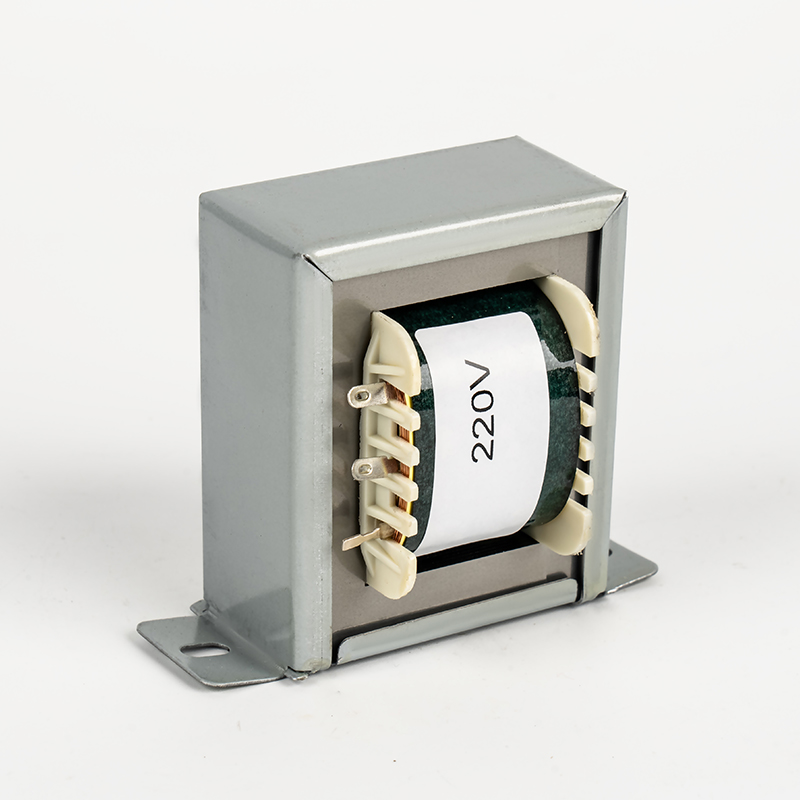
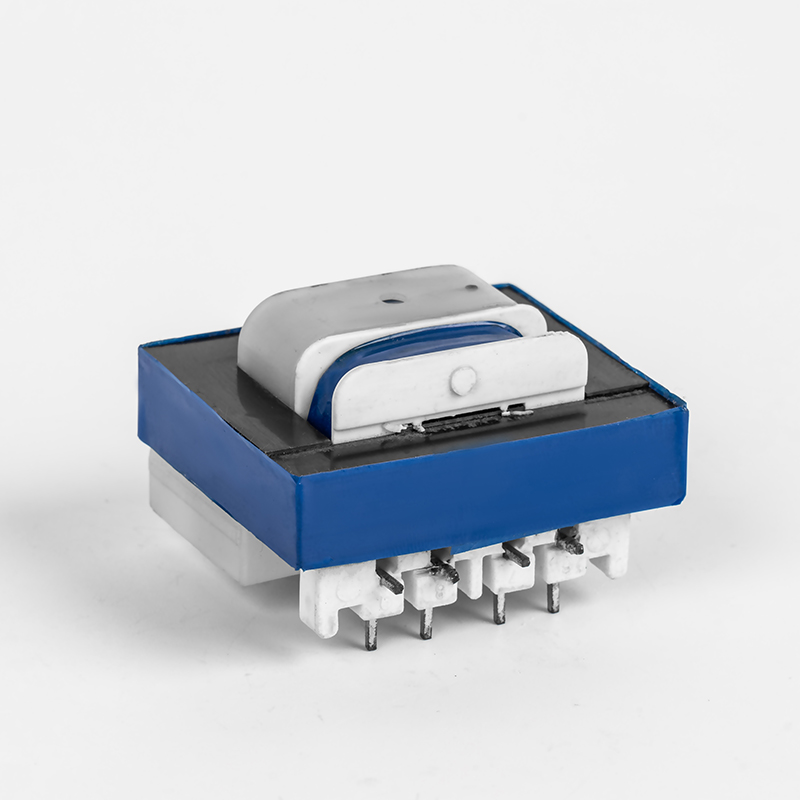
- Use neoprene pads for small EI and toroidal units, and spring or rubber-in-shear isolators above roughly 50 kVA.
- Use flexible conduit and braided links so vibration does not travel along rigid pipework.
Mechanical fixes
- Re-torque core clamps and enclosure fixings to the maker's figures; thermal cycling loosens them.
- Add mass-loaded vinyl or acoustic foam to panels, keeping ventilation paths clear.
- Check clearances. A cable touching a vibrating cover will buzz far more than the transformer itself.
Design choices
- Specify a lower flux density; quiet units carry more core steel and more turns.
- Ask for step-lap mitred core joints, which clamp more rigidly than simple butt joints.
- Treat amorphous cores with care: they cut no-load loss but usually run louder.
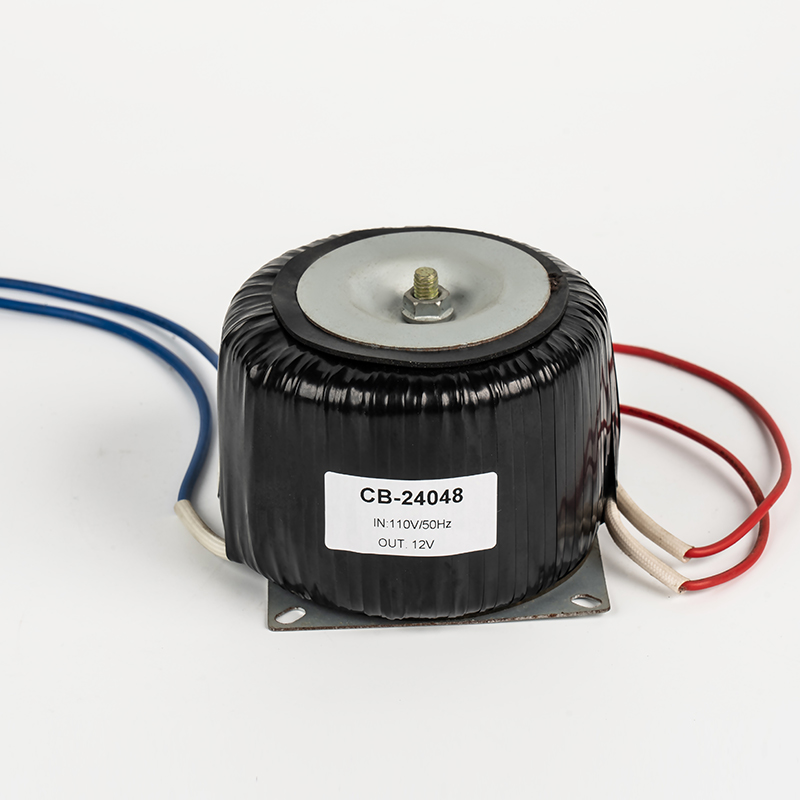
- For toroidal and audio types, vacuum varnish or potting locks the assembly together and removes most of the buzz.
Specifying Quiet From the Start
Where a transformer will sit near workstations, patient rooms or apartments, noise belongs on the specification sheet. Factory sound tests are carried out in a quiet environment; the same unit in a real room usually measures 3 dB to 5 dB higher because of reflections and background noise.
Typical sound levels at one metre for common transformer types. Values are indicative and depend on design, load and the standard used.
Anything that matters should be written into the order:
- A guaranteed sound level in dB(A) at one metre, measured to IEC 60076-10 for power transformers or the relevant dry-type standard.
- Maximum flux density at rated voltage plus 5%, with a commitment that the design stays below it.
- The harmonic spectrum and any DC component of the load, so core and winding can be sized for it.
- Whether isolation mounts, flexible connections and a ventilated sound enclosure are included.
- A sound test report with the 1/3-octave spectrum for noise-sensitive sites.
In most cases extra core steel costs less than an acoustic hood and removes the noise at its source. A manufacturer that winds and tests its own units can usually quote both options, so state the target decibel figure and the mounting conditions when you ask for a custom transformer design.
Frequently Asked Questions
Is a humming transformer dangerous?
Almost never. Hum appears as soon as the unit is energised, even with nothing connected to the secondary. Crackling, popping, a burning smell or a sudden change in pitch are the signals that need attention.
Why does it sound louder at night?
Supply voltage rises as demand falls, and background noise in the building drops. Both effects push the same hum further into your awareness.
Can a transformer be completely silent?
No. Every energised core vibrates. The realistic target is a level below the background noise of the room at the listening position.
Does a bigger kVA rating mean less noise?
Not by itself. Standard ratings are designed at similar flux densities. Noise falls only when a lower flux density is specified and paid for in core material.
Does load change the hum?
Core hum stays roughly constant from no load to full load. Winding forces rise with the square of the current, so the sound grows and hardens as the load increases.
Transformer noise is a design and installation question long before it becomes a maintenance one. A steady 100 Hz or 120 Hz tone tells you the core is doing its job; a new rattle, crackle or change of pitch tells you to look closer. Measuring supply voltage, load harmonics and sound level at one metre usually identifies the cause in an afternoon, and those same three numbers define what to ask for at the next order. Our background in laminated EI, toroidal and C-core transformer manufacturing is summarised on the about page.


Welcome To CHUANGBIAO
Address : No.420-3, Sanbei East Road, Guanhaiwei Industrial Zone, Cixi City, Ningbo, Zhejiang, China
Contact
- Tel: +86 186 6825 0703
- Email: linjian@nbcbdz.com
About us
Products
Copyright © Ningbo Chuangbiao Electronic Technology Co., Ltd.
All Rights Reserved. EI Transformer Manufacturer


