
 English
 中文简体
中文简体UL, CE and RoHS Certification for Transformers: What Buyers Must Check
2026-10-02
Content
- 1 UL, CE and RoHS Answer Three Different Questions
- 2 UL Certification for Transformers: Which Standard Applies
- 3 CE Marking Is a Declaration You Sign, Not a Certificate You Buy
- 4 RoHS in Practice: Ten Substances, Two Thresholds
- 5 Where RoHS Scope Ends and Other Production Lines Begin
- 6 What a Complete Compliance File Should Contain
- 7 Compliance Traps That Delay Shipments
- 8 Frequently Asked Questions
A 5 kVA isolation transformer clears production, reaches a US warehouse, and stops there. The folder looks complete: a CE certificate from a lab, a RoHS report, and a UL mark on the nameplate. The buyer's compliance team rejects the lot anyway, because the CE document never names the Low Voltage Directive and the RoHS report tested a different wire gauge.
UL, CE and RoHS are not three grades of the same approval. UL is third-party safety certification with continuing factory inspections. CE is a legal declaration the manufacturer signs, confirming the unit meets every applicable EU directive. RoHS is a substance-restriction directive carried inside the CE framework and verified material by material. Proving one proves nothing about the other two.
What follows is how each mark works for transformers, what to request in writing, and where compliance files usually fall apart.
UL, CE and RoHS Answer Three Different Questions
Suppliers quote the three marks on one line of an invoice, which is why buyers assume they travel together. They do not.
| Mark | What it actually is | Who issues it | Standards seen on transformers |
|---|---|---|---|
| UL | Third-party safety certification with periodic factory follow-up | UL Solutions or another Nationally Recognized Testing Laboratory | UL 5085-1, UL 5085-2, UL 5085-3, UL 1561, UL 60601-1 for medical |
| CE | The manufacturer's legal declaration of EU conformity | The manufacturer, signed in-house | LVD 2014/35/EU, EMC 2014/30/EU, RoHS 2011/65/EU |
| RoHS | Substance restriction inside the CE framework | A laboratory supplies evidence; the manufacturer declares | IEC 62321 for testing, EN IEC 63000 for assessment |
One consequence: a transformer can be CE marked and legally sold in the EU while a US buyer still rejects it, because the purchase contract asks for a UL Recognized Component. Certification is a contract term as much as a legal requirement.
UL Certification for Transformers: Which Standard Applies
The standard follows the transformer's function, not its rating. General-purpose and control transformers fall under UL 5085-2, with UL 5085-1 covering general requirements. Class 2 and Class 3 low-energy outputs use UL 5085-3; larger dry-type power transformers sit under UL 1561; medical transformers are evaluated with the end product under UL 60601-1.
Listed, Recognized, or Merely Tested
A UL Listed mark belongs to a finished product; a UL Recognized Component mark, the reversed RU, belongs to a part built into someone else's listed product. That is what most transformers carry. A test report from a laboratory that is not an NRTL is neither. Verify the file number, usually in the E123456 format, in UL Product iQ, and confirm the file names the plant that actually builds your order.
What UL Tests, and the Audit That Follows
Dielectric withstand, temperature rise at rated load and abnormal-condition behaviour drive every review. Insulation class matters too: Class B (130 °C) and Class F (155 °C) windings are not interchangeable, and a Class B design cannot be relabelled Class F without retesting. After listing, UL Follow-Up Service inspectors visit the plant periodically, commonly four times a year; moving production without a factory change notification can cancel the listing.
CE Marking Is a Declaration You Sign, Not a Certificate You Buy
A transformer rated between 50 V and 1,000 V AC falls under the Low Voltage Directive 2014/35/EU. The EMC Directive 2014/30/EU applies to the equipment it is installed in and, in practice, to most mains transformers. RoHS 2011/65/EU rides on the same CE framework. The manufacturer writes and signs the EU Declaration of Conformity, naming each directive, the harmonised standards applied and the EU authorised representative.
The technical file behind that signature, covering drawings, bill of materials, test results and risk assessment, is kept for ten years after the last unit is placed on the market. Notified body involvement is not automatic; a manufacturer applying harmonised standards can self-declare under the LVD. A CE certificate with no directives named and no signed DoC is testing evidence, not market access.
RoHS in Practice: Ten Substances, Two Thresholds
RoHS restricts ten substances: lead, mercury, cadmium, hexavalent chromium, the flame retardants PBB and PBDE, and four phthalates (DEHP, BBP, DBP, DIBP). Cadmium is limited to 0.01% (100 ppm) by weight in a homogeneous material; the other nine are limited to 0.1% (1,000 ppm).
- 4 metals: Pb, Hg, Cd, Cr VI
- 2 flame retardants: PBB, PBDE
- 4 phthalates: DEHP, BBP, DBP, DIBP
Homogeneous material is the phrase that makes RoHS work expensive. It means a single material that cannot be mechanically separated: the tin plating on a terminal, the PVC insulation on a lead, the solder alloy, the varnish on a winding. One transformer can hold thirty or more such materials, each needing test data or a supplier declaration built on it. IEC 62321 is the test method series; EN IEC 63000 is the assessment standard.
Annex III exemptions remain common: lead in copper alloys up to 4% (6(c)), high melting point solders containing at least 85% lead (7(a)), and lead in glass or ceramic components (7(c)-I). Exemptions expire, so a declaration citing one that lapsed years ago is a warning sign, not a shortcut.
Where RoHS Scope Ends and Other Production Lines Begin
RoHS covers electrical and electronic equipment, and that boundary matters when one supplier ships more than one product family. Factories that wind transformers often run stainless steel drinkware lines as well. For a vacuum flask or a food jar, RoHS is not the governing rule even when a buyer asks for a RoHS report out of habit; food-contact law is, including EU Regulation 1935/2004 and 10/2011, FDA 21 CFR in the United States, and LFGB in Germany.
The declaration workflow is identical in both cases: supplier statements for each material, batch traceability and finished-article testing. Two examples from the drinkware lines we run in the same plant:
A mixed-material build is harder to document, because the stainless steel liner, the bamboo lid and the silicone seal each carry a separate declaration:
What a Complete Compliance File Should Contain
Request these six items before the first shipment, not after a customer audit lands.
- UL file number with the exact standard the model was evaluated to, and confirmation that the file covers your production plant.
- A signed EU Declaration of Conformity listing every applicable directive, harmonised standard and EU authorised representative.
- RoHS test reports organised by homogeneous material, with part numbers, sample photos, laboratory accreditation and the IEC 62321 method reference.
- Dated supplier material declarations for every component, plus a contractual change-notification clause.
- Hi-pot and temperature-rise records for the lot you are buying, not for a golden sample.
- A REACH SVHC declaration checked against the current candidate list, plus efficiency data where external power supplies fall under Regulation (EU) 2019/1782.
Compliance Traps That Delay Shipments
- A CE certificate with no directives named and no signed DoC behind it.
- RoHS reports that tested a similar part instead of the material in your bill of materials.
- A UL file that lists a different plant from the one shipping your order.
- Insulation class upgraded on the label without retesting the winding system.
- Declarations citing an Annex III exemption that has already expired.
Frequently Asked Questions
Is CE the same as UL?
No. CE is the manufacturer's legal declaration of EU conformity, signed in-house. UL is third-party safety certification with continuing plant inspections. A transformer can hold one, both or neither and still be legally sold in some market.
Does a transformer need RoHS certification as a component?
RoHS addresses electrical and electronic equipment rather than bare components, so transformers are not directly in scope. The equipment they are built into must comply, which is why OEMs pass the requirement down through contracts and declarations.
How long does UL take on a general-purpose transformer?
Six to twelve weeks is a realistic range for a new design once construction review and testing are included, followed by routine follow-up inspections after the listing is issued.
Compliance paperwork looks like a formality until a container is held at the port. Ask for the DoC, the UL file number and homogeneous-material RoHS data before tooling starts, and keep them in one folder with a review date.
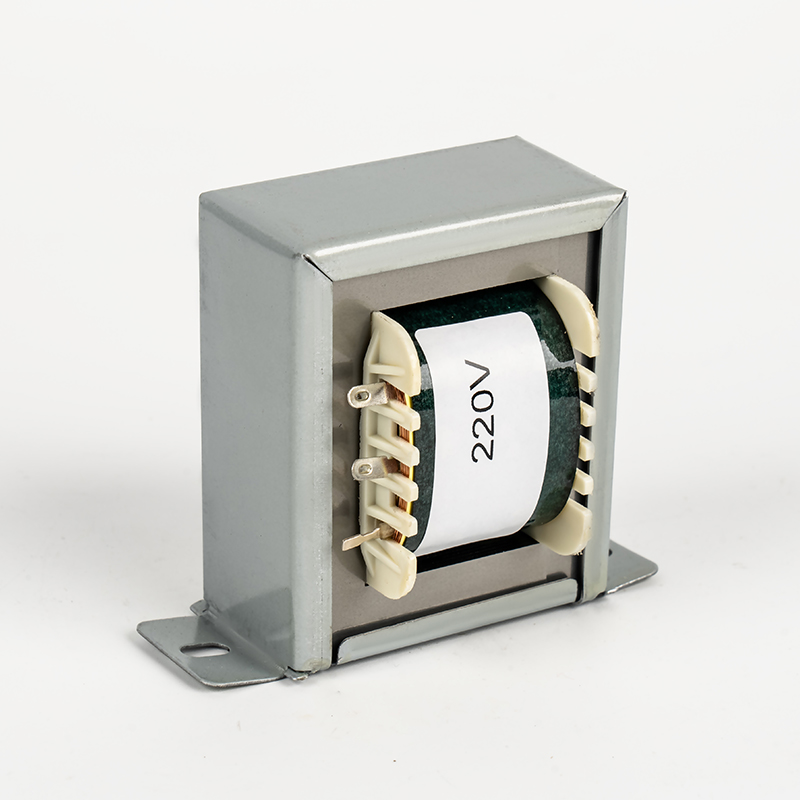
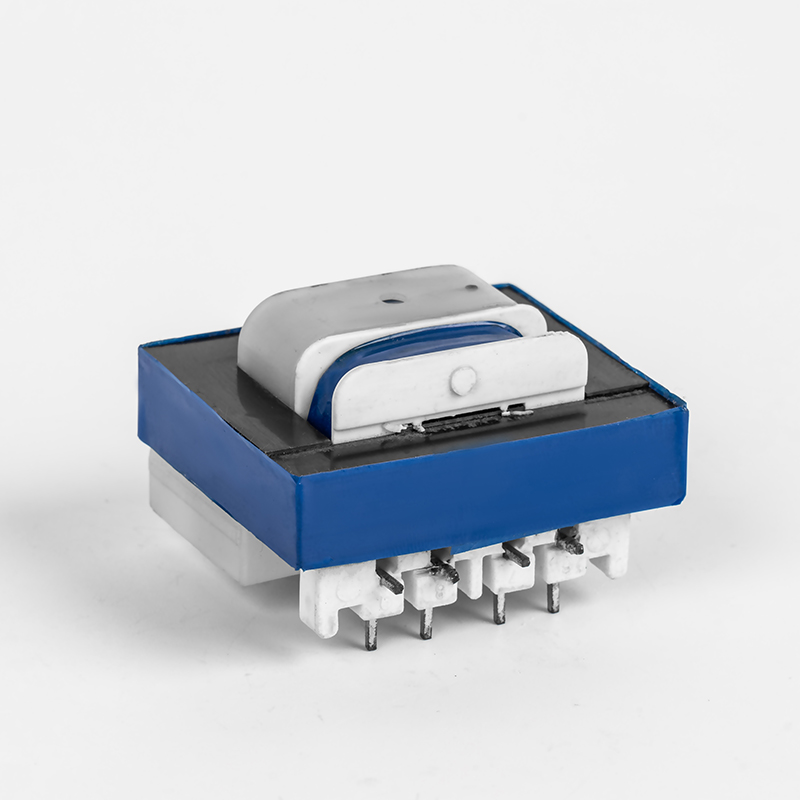
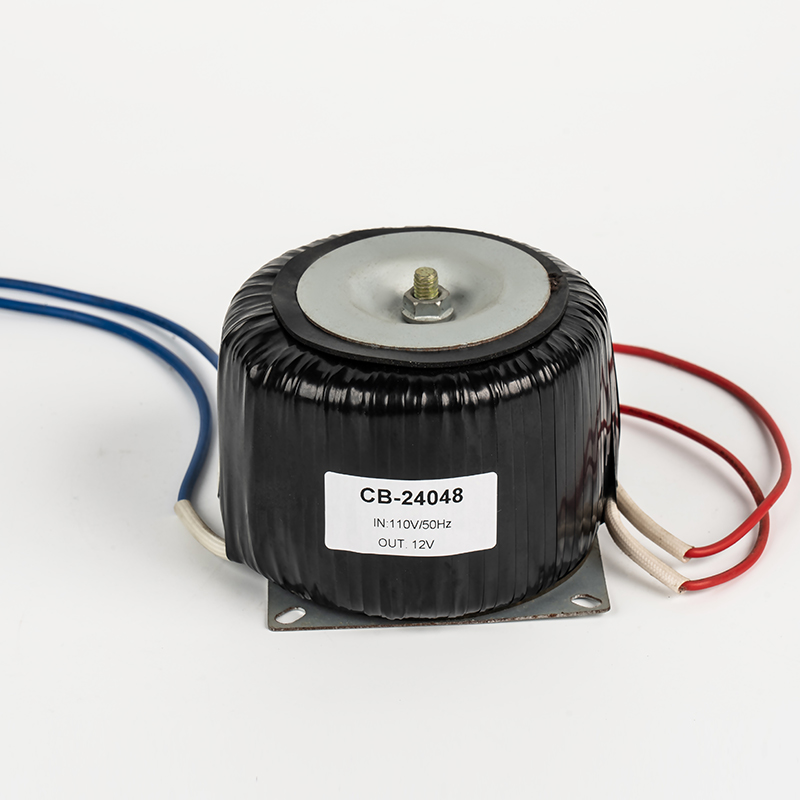
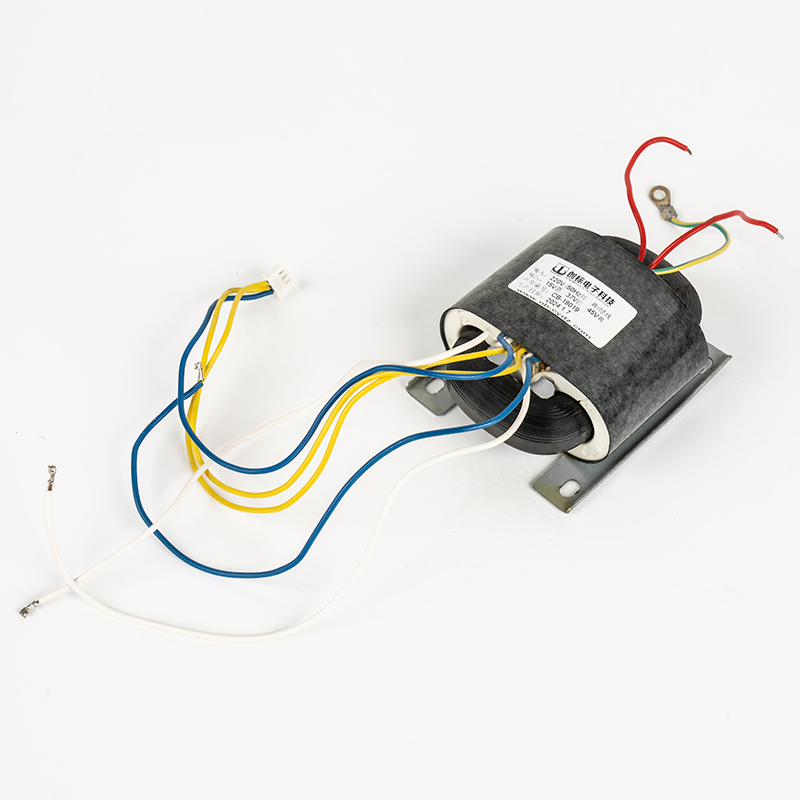
We build EI, toroidal, C-core and high-frequency transformers for industrial, medical and audio applications, with signed material declarations for every component we buy. How we work is described on our company profile page, and custom ratings, lead lengths and mounting styles begin with our customization process.


Welcome To CHUANGBIAO
Address : No.420-3, Sanbei East Road, Guanhaiwei Industrial Zone, Cixi City, Ningbo, Zhejiang, China
Contact
- Tel: +86 186 6825 0703
- Email: linjian@nbcbdz.com
About us
Products
Copyright © Ningbo Chuangbiao Electronic Technology Co., Ltd.
All Rights Reserved. EI Transformer Manufacturer


