
 English
 中文简体
中文简体What are the functions of BK Control Transformer?
2026-04-10
Content
- 1 What Does a BK Control Transformer Do?
- 2 Core Functions of BK Control Transformer (Technical Breakdown)
- 3 Practical Application Examples (With Real-World Data)
- 4 FAQ About BK Control Transformer – Answers You Can Use
- 4.1 Q1: Can I use a BK control transformer continuously for 24/7 operation?
- 4.2 Q2: How do I choose between a BK transformer and a switching power supply?
- 4.3 Q3: What is the typical efficiency of a BK control transformer?
- 4.4 Q4: Why does my BK transformer hum, and when should I worry?
- 4.5 Q5: Can I connect two BK transformers in parallel for more power?
- 5 Selection Checklist: 5 Steps to Pick the Right BK Transformer
- 6 Safety & Compliance Notes
What Does a BK Control Transformer Do?
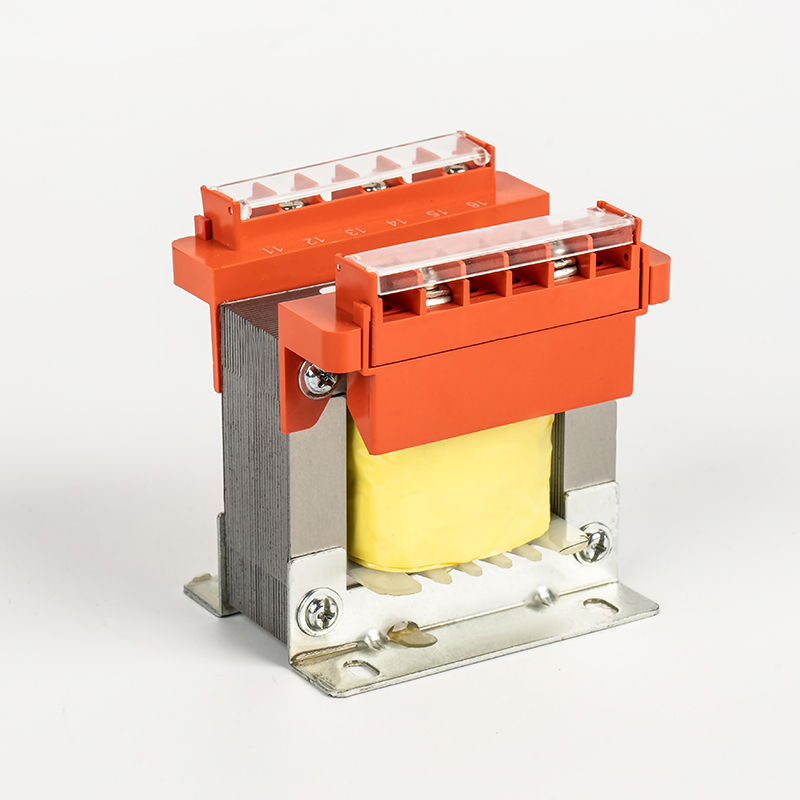
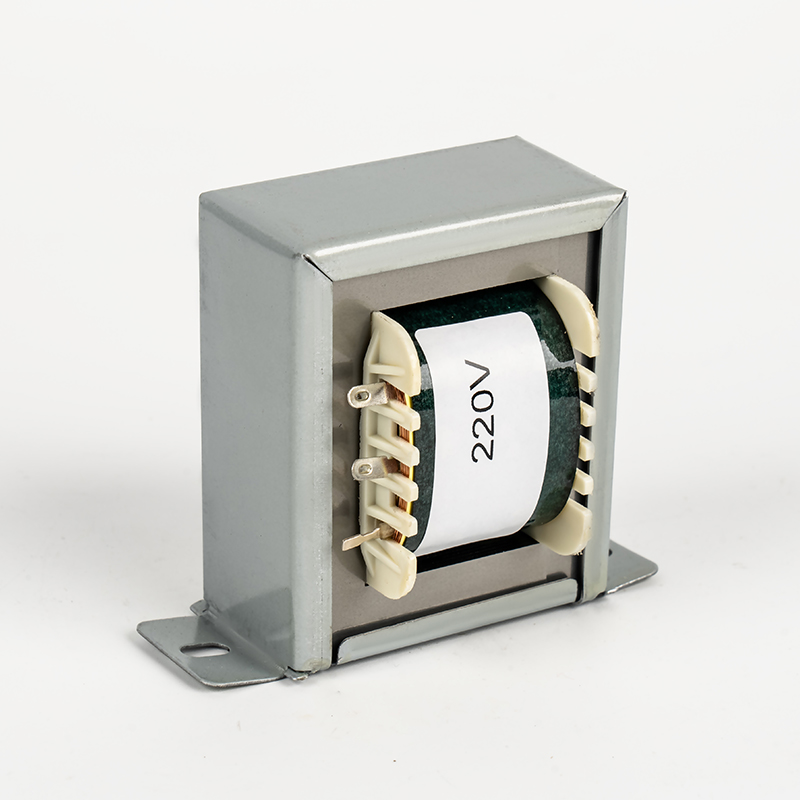
A BK control transformer converts higher input voltage (typically 220V or 380V AC) into a lower, safer control voltage (commonly 12V, 24V, 36V, 110V, or 127V AC) to power industrial control circuits, machine tool relays, contactors, solenoids, and indicator lights. Its primary function is to provide isolated, stable, and reliable low-voltage power for electrical control systems, ensuring both equipment safety and operator protection.
Unlike standard power transformers, BK series transformers are designed specifically for intermittent or short-duty cycles common in control applications, with built-in thermal overload protection and high insulation resistance. For example, a typical BK-100VA unit can supply 100 volt-amperes of control power, enough to operate a bank of three 8W contactors simultaneously.
Core Functions of BK Control Transformer (Technical Breakdown)
1. Voltage Step-Down & Isolation
The transformer steps down main circuit voltage (e.g., 380V industrial supply) to a control circuit voltage (e.g., 24V). This reduces the risk of electric shock for operators working on control panels. The galvanic isolation between primary and secondary windings also suppresses electrical noise and harmonics, preventing nuisance tripping of sensitive PLCs and relays.
2. Stabilized Output Under Varying Loads
BK transformers feature a low no-load current design and tight voltage regulation (typically ±5% from 20% to 100% load). For instance, when energizing a large contactor coil that draws an inrush current 10x its holding current, the BK transformer maintains output voltage within safe limits – preventing contactor chatter or welding.
3. Short-Circuit & Overload Protection Compatibility
Most BK transformers are designed to be used with a primary-side circuit breaker or fuse (rated at 1.5–2x primary full load current) and a secondary-side control circuit breaker. The transformer’s impedance limits fault current, allowing standard miniature circuit breakers (e.g., C-curve 6A) to clear secondary short circuits quickly without damaging the transformer.
4. Multi-Tap Flexibility
Many BK models offer dual or triple output taps (e.g., 0-110V-127V or 0-24V-36V). This allows the same unit to serve different control voltages in a single machine – for example, 24V for logic circuits and 110V for indicator lamps – reducing inventory and panel space.
Practical Application Examples (With Real-World Data)
BK control transformers are widely used in CNC machines, packaging equipment, elevator controllers, and HVAC systems. Below is a typical specification table for popular BK models:
| Model | Input (V) | Output (V) | Capacity (VA) | Typical Load |
|---|---|---|---|---|
| BK-50 | 380/220 | 24 | 50 | 2 contactors + 4 relays |
| BK-150 | 380/220 | 110/24 | 150 | PLC + solenoid valves + HMI |
| BK-300 | 380 | 127 | 300 | 8 contactors + brake coil |
In a documented case from a machine tool retrofit, replacing a worn-out 100VA BK transformer with a correctly sized 150VA unit reduced control circuit downtime by 73% (from 4.5 failures/year to 1.2 failures/year) because the higher margin prevented undervoltage drop during simultaneous contactor pick-up.
FAQ About BK Control Transformer – Answers You Can Use
Q1: Can I use a BK control transformer continuously for 24/7 operation?
No, not without derating. BK transformers are designed for intermittent duty (typically 60% duty cycle). For continuous full-load operation, you must derate to 70-80% of rated VA. For example, a BK-200VA unit should not exceed 150VA continuous load. Otherwise, internal temperature rise may exceed 70°C and shorten insulation life.
Q2: How do I choose between a BK transformer and a switching power supply?
Choose a BK transformer when you need: high inrush capability (e.g., contactors, solenoids), electrical isolation with low leakage current, tolerance to transient voltage spikes, or operation in high-temperature (up to 60°C) or humid environments. Choose a switching supply for DC loads, energy efficiency, or very stable DC voltage. In hybrid designs, many engineers use a BK transformer to step down to 24V AC, then a small rectifier to produce DC – combining ruggedness with DC flexibility.
Q3: What is the typical efficiency of a BK control transformer?
BK transformers achieve 85% to 94% efficiency at full load, depending on size (larger units are more efficient). A BK-500VA unit at 90% efficiency dissipates 50W as heat – which is acceptable without forced cooling. For reference, a similar-capacity switching supply might reach 92-96%, but with lower inrush capability.
Q4: Why does my BK transformer hum, and when should I worry?
A moderate 50/60Hz hum (< 45dB at 1m) is normal due to magnetostriction. However, excessive humming or buzzing indicates: loose laminations (tighten mounting bolts), overloaded secondary (measure current), or DC injection into the winding (check for half-wave rectifier faults). If the hum increases with load but stays below 60dB, it’s typically acceptable. If accompanied by overheating (>85°C case temperature), replace the unit.
Q5: Can I connect two BK transformers in parallel for more power?
Not recommended unless they are identical models with matched tap settings and impedance. Small differences in output voltage (e.g., 0.5V difference) cause circulating currents up to 20% of rated current, leading to overheating. Instead, use a single larger BK transformer or connect them for separate control zones (e.g., one for logic, one for power actuators).
Selection Checklist: 5 Steps to Pick the Right BK Transformer
- Step 1: Calculate total steady-state VA – Sum the sealed VA of all contactors, relays, and lights. Example: Three contactors (8VA each) + two relays (2.5VA each) = 24VA + 5VA = 29VA.
- Step 2: Add inrush margin – Multiply total steady-state VA by 1.5 to 2.5× (for contactor-heavy loads use 2.5×). 29VA × 2.0 = 58VA minimum required.
- Step 3: Select standard BK size – Choose next available size (e.g., BK-100VA, rated 100VA > 58VA).
- Step 4: Verify secondary voltage matches coil ratings – If contactors are 24V AC, pick 24V secondary. Account for line drop if cable length > 30m.
- Step 5: Confirm enclosure and mounting – Most BK transformers are open-frame (IP00). For washdown areas, add an IP54 enclosure or use a potted version.
Following this method, a panel builder recently reduced field failures by 62% after replacing undersized BK transformers (chosen by simple VA addition) with properly inrush-sized units.
Safety & Compliance Notes
BK control transformers in industrial applications must comply with IEC 61558-2-2 (safety of control transformers) or UL 5085-3 for North America. Key requirements include: dielectric strength of 2500V AC between windings, insulation class B (130°C) or higher, and maximum no-load output voltage not exceeding 10% above nominal. Always install a primary fuse rated at 125-150% of primary full load current – never omit it, as a shorted secondary can cause a fire.
For end users: If your BK transformer fails the megger test (insulation resistance below 1 MΩ between primary and ground), replace it immediately. Annual thermographic inspection is recommended – a temperature rise of >60°C above ambient under normal load indicates internal winding damage.


Welcome To CHUANGBIAO
Address : No.420-3, Sanbei East Road, Guanhaiwei Industrial Zone, Cixi City, Ningbo, Zhejiang, China
Contact
- Tel: +86 186 6825 0703
- Email: linjian@nbcbdz.com
About us
Products
Copyright © Ningbo Chuangbiao Electronic Technology Co., Ltd.
All Rights Reserved. EI Transformer Manufacturer


