
 English
 中文简体
中文简体The Complete Guide to Transformer:Types, Ratings & Applications
2026-03-27
Content
An electrical transformer is a static electromagnetic device that transfers electrical energy between circuits through electromagnetic induction. Its rating—expressed in volt-amperes (VA) or kilovolt-amperes (kVA)—indicates the maximum load it can handle continuously without overheating. Understanding how transformers are rated, what types exist, and which suits your application is essential for safe, efficient power system design.
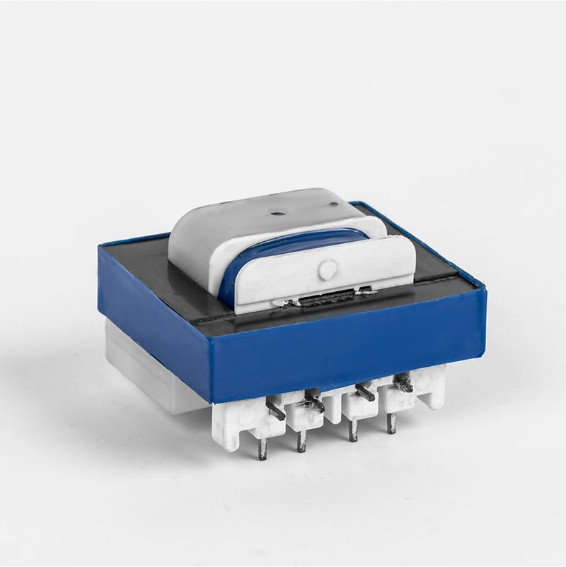
How Is a Transformer Rated?
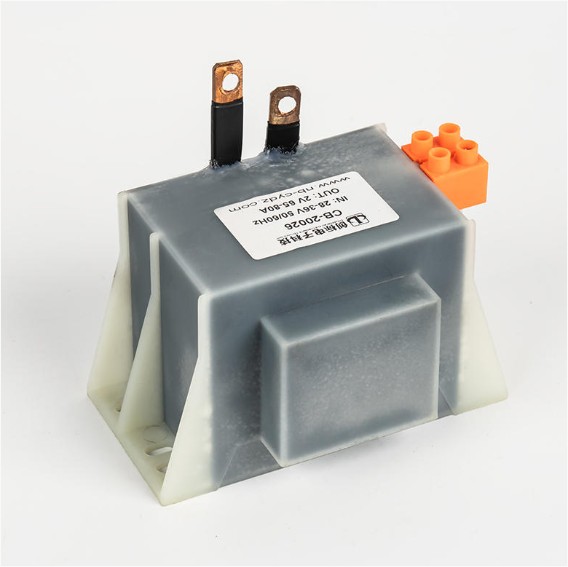
Transformers are rated in volt-amperes (VA) or kilovolt-amperes (kVA), not watts—because the rating must account for both resistive and reactive loads, regardless of power factor. The rating reflects the product of the transformer's rated voltage and rated current on either the primary or secondary side.
Key parameters in a transformer nameplate include:
- kVA rating – Total apparent power capacity (e.g., 50 kVA, 500 kVA)
- Primary and secondary voltages – Input and output voltage levels (e.g., 11,000V / 400V)
- Frequency – Typically 50 Hz or 60 Hz
- Impedance (%Z) – Affects short-circuit current; common values range from 4% to 6%
- Cooling class – ONAN (oil natural air natural), ONAF, OFAF, etc. for large units; AN or AA for dry-type
- Insulation class – Temperature rating such as Class B (130°C), Class F (155°C), or Class H (180°C)
For example, a 100 kVA transformer at 400V secondary can supply a maximum current of 144.3 A (100,000 ÷ 400 × √3 for three-phase). Exceeding this continuously causes insulation degradation and eventual failure.
| Rating | Typical Use | Phase |
|---|---|---|
| 25–100 VA | Control circuits, doorbells, HVAC low-voltage | Single-phase |
| 1–10 kVA | Small commercial equipment, isolation applications | Single/Three-phase |
| 10–500 kVA | Industrial facilities, commercial buildings | Three-phase |
| 1–100 MVA | Grid substations, power generation | Three-phase |
Step-Up vs. Step-Down Transformers
The most fundamental classification of electrical transformers is by voltage conversion direction.
Step-Up Transformer
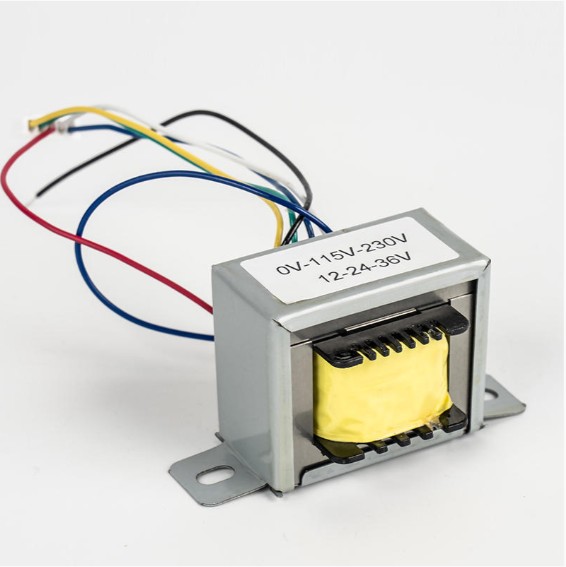
A step-up transformer increases voltage from primary to secondary. The secondary winding has more turns than the primary. For instance, a generator producing 11 kV may feed a step-up transformer to output 400 kV for long-distance transmission—reducing current and therefore resistive losses (P = I²R) by a factor of over 1,000. Power plants universally use step-up transformers at their output stage.
Step-Down Transformer
A step-down transformer reduces voltage for safe end-user consumption. Distribution substations step down from 33 kV or 11 kV to 400V/230V for residential and commercial supply. Smaller step-down units (e.g., 240V to 12V) power low-voltage lighting, doorbells, and HVAC control systems.
Both types follow the same turns-ratio principle: V₁/V₂ = N₁/N₂, where V is voltage and N is the number of winding turns.
Different Types of Transformers and Their Applications
Transformers are engineered in many forms, each optimized for specific performance requirements, environments, and power levels. Below are the most important types.
Power Transformer
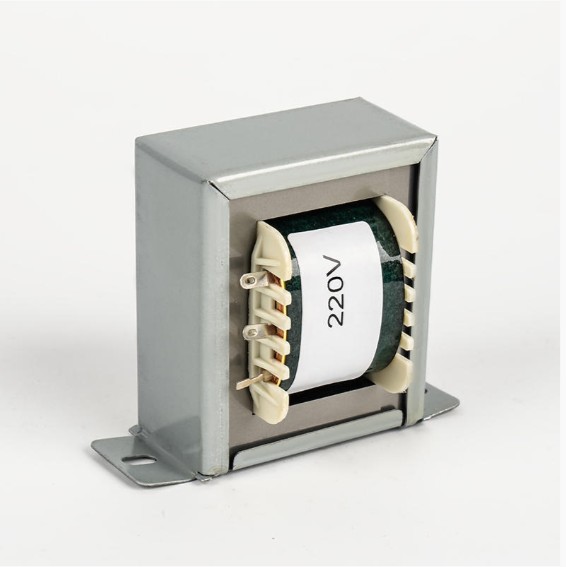
Power transformers operate in transmission networks at voltages above 33 kV and ratings typically from 100 MVA to over 1,000 MVA. They are designed for near-continuous full-load operation and prioritize low losses above all other factors. Oil-immersed cooling (ONAN/ONAF) is standard. Their efficiency commonly exceeds 99%, making even a 0.1% improvement significant at grid scale.
Ningbo Chuangbiao Electronic Technology Co., Ltd. applies low-frequency transformer technology within power system infrastructure—ensuring efficient energy transmission and reducing line losses to guarantee stable grid operation.
Distribution Transformer
Distribution transformers step voltage down from medium voltage (typically 11 kV or 33 kV) to low voltage (400V/230V) at the point of delivery. They operate at variable loads and are rated from 25 kVA to 2,500 kVA. Both oil-type and dry-type (cast resin) variants are common, with dry-type preferred indoors due to fire safety.
Air Conditioner Transformer
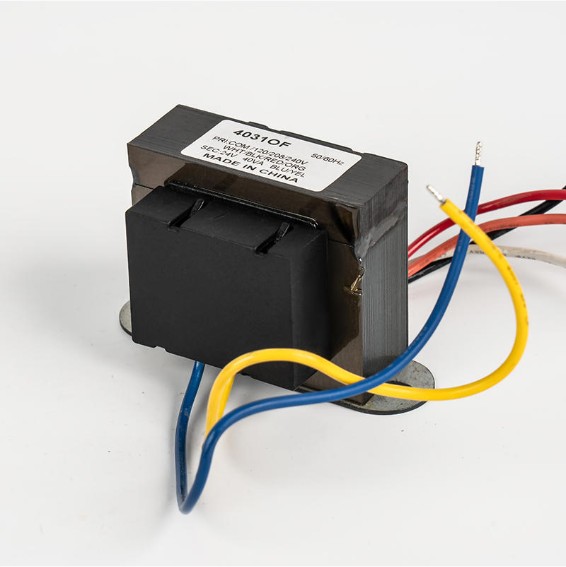
An air conditioner transformer is a specialized low-frequency transformer that converts incoming AC mains voltage to the DC levels required to drive compressors, fan motors, and control boards. In a split-system air conditioner, control board transformers typically output 24V AC for thermostat circuits. Larger commercial HVAC units may use transformers rated at 40–150 VA for control power.
In inverter-type air conditioners, the transformer works as part of the AC-DC-AC conversion chain. Efficient transformer design here directly impacts the unit's energy rating (EER/COP). Chuangbiao's low-frequency transformers serve precisely this role in refrigeration equipment—converting AC power into DC suitable for driving compressors and fan motors, achieving efficient cooling or heating.
Isolation Transformer
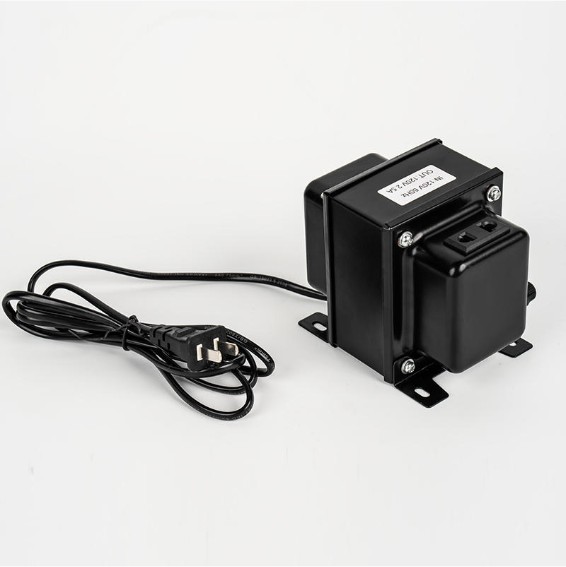
An isolation transformer has a 1:1 turns ratio—its primary purpose is not voltage conversion but galvanic isolation between circuits. This breaks ground loops, suppresses common-mode noise, and provides personnel safety in environments like hospitals, laboratories, and data centers.
Key specifications to note:
- Isolation voltage: Typically 1,500V to 4,000V between windings
- Leakage current: Medical-grade units must keep leakage below 500 µA (IEC 60601)
- Shielded windings: Faraday shielding further reduces capacitive coupling in sensitive electronics
In industrial automation, isolation transformers protect PLCs and sensors from high-voltage transients on the power line.
Toroidal Transformer
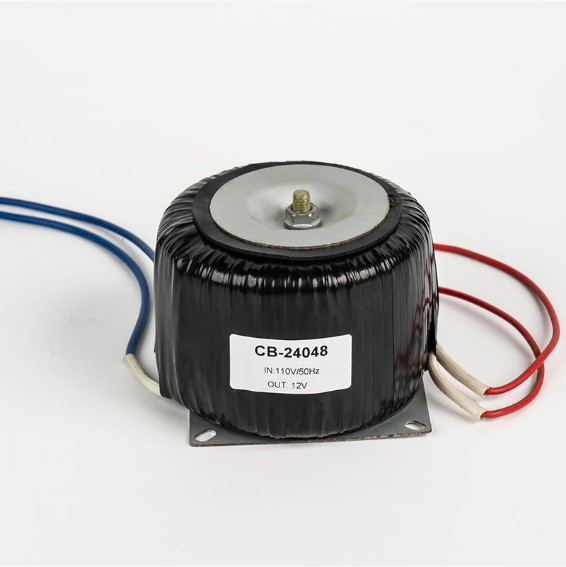
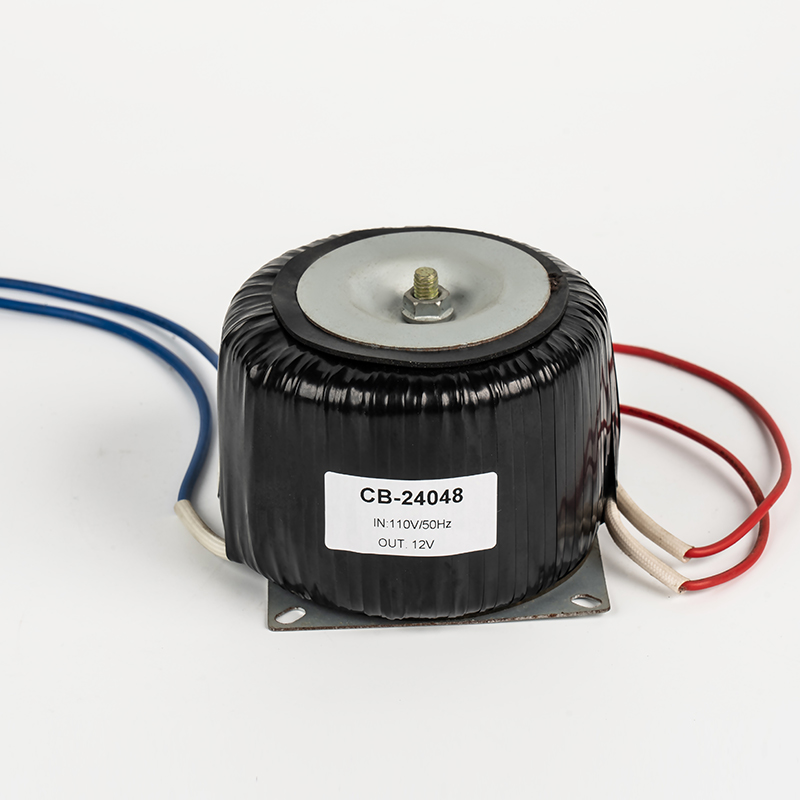
A toroidal transformer uses a doughnut-shaped (toroidal) magnetic core rather than a conventional E-I laminate stack. The continuous core path eliminates air gaps, providing:
- Up to 95–98% efficiency, versus ~85–90% for comparable EI-core designs
- Low electromagnetic interference (EMI) – stray magnetic field is typically 8–10 times lower than EI-core transformers
- Compact and lightweight – up to 50% smaller and lighter than equivalent EI designs
- Low no-load losses and audible noise
Toroidal transformers are widely used in audio equipment, medical instruments, industrial control panels, and premium power supplies where space and EMI are critical constraints. Their main limitation is higher cost per VA compared to conventional laminate designs, and susceptibility to DC offset causing core saturation.
Auto-Transformer
An auto-transformer uses a single shared winding (with a tap point) rather than two separate windings. This makes it more compact and cheaper—useful where modest voltage adjustment is needed, such as 220V to 110V conversion or motor soft-starting. However, it provides no galvanic isolation, making it unsuitable where safety isolation is required.
Instrument Transformer (CT & PT)
Current transformers (CT) and potential/voltage transformers (PT/VT) are used for measurement and protection, not power delivery. A CT rated 1000:5 A steps down current for safe metering. A PT rated 11,000:110 V enables voltmeters and relays to operate at standard instrument levels. Accuracy classes range from 0.1 to 3 for metering, and 5P or 10P for protection.
Transformer Types at a Glance
| Type | Core Shape | Isolation | Typical Efficiency | Primary Use |
|---|---|---|---|---|
| Power Transformer | EI / Shell / Core | Yes | >99% | Grid transmission |
| Distribution Transformer | EI / Shell | Yes | 97–99% | Utility distribution |
| Toroidal Transformer | Toroid | Yes | 95–98% | Audio, medical, industrial |
| Isolation Transformer | EI / Toroid | Yes (primary function) | 90–98% | Safety, noise suppression |
| Auto-Transformer | EI / Toroid | No | 95–99% | Voltage adjustment, motor start |
| AC Transformer (HVAC) | EI / Toroid | Yes | 90–97% | HVAC control and drive circuits |
Low-Frequency Transformers in Industrial and New Energy Applications
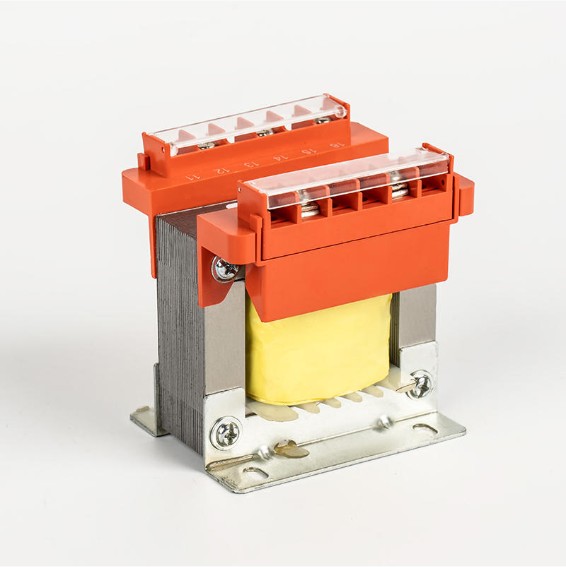
Low-frequency transformers (operating at 50 or 60 Hz mains frequency) remain the backbone of industrial power systems due to their robustness, high efficiency, and ability to handle large power levels reliably. Unlike high-frequency switching transformers, low-frequency designs are inherently more durable and better suited to harsh environments.
Industrial Control and Automation
In industrial automation systems, low-frequency transformers serve as core components in power control, realizing AC-to-DC conversion and driving motors and actuators. In electric welders, they provide stable welding voltage and current—critical to consistent weld quality. Voltage regulators and stabilizers also depend on low-frequency transformers to maintain tight output tolerances under fluctuating loads.
Photovoltaic Inverters and Energy Storage
As renewable energy scales globally, low-frequency transformers have become indispensable in photovoltaic (PV) inverters. In a grid-tied PV system, the transformer converts DC from solar panels to grid-compatible AC, stepping voltage up to grid levels while providing essential galvanic isolation—a regulatory requirement in many countries. Typical PV inverter transformers operate at efficiencies of 97–98.5%.
In battery energy storage systems (BESS), transformers handle bidirectional power flow—charging the battery from the grid (AC to DC) and discharging back to the grid or loads (DC to AC). Their reliability in this cycling role directly determines system uptime and round-trip efficiency.
Ningbo Chuangbiao Electronic Technology Co., Ltd. develops low-frequency transformers precisely optimized for these new energy applications, combining high efficiency with the thermal stability required for continuous operation in photovoltaic and storage environments.
Lighting and Home Appliances
Low-frequency transformers in lighting applications regulate voltage to control brightness and color consistency. In home appliances, they ensure stable supply despite mains fluctuations—protecting sensitive electronics from voltage sags or surges that could shorten equipment life or cause operational failures.
How to Choose the Right Transformer for Your Application
Selecting the wrong transformer type or rating leads to overheating, premature failure, or safety hazards. Consider these factors:
- Load type and power factor – Inductive loads (motors, welders) have lower power factors; size the kVA accordingly, typically adding 20–25% margin.
- Voltage requirements – Confirm input (primary) and output (secondary) voltages, and whether step-up or step-down is needed.
- Isolation requirement – If galvanic isolation is needed for safety or noise rejection, use an isolation or standard two-winding transformer, not an auto-transformer.
- Physical constraints – Where space and EMI are critical (e.g., audio amps, medical devices), choose toroidal designs.
- Environment – Indoor dry-type (cast resin) for confined spaces; oil-cooled for outdoor substations or high-capacity installations.
- Efficiency and operating costs – For transformers running 24/7, a 1% improvement in efficiency on a 100 kVA unit saves approximately 876 kWh per year—significant over a 20-year asset life.
Always verify compliance with applicable standards: IEC 60076 (power transformers), IEC 61558 (safety transformers), or IEEE C57 series for North American applications.


Welcome To CHUANGBIAO
Address : No.420-3, Sanbei East Road, Guanhaiwei Industrial Zone, Cixi City, Ningbo, Zhejiang, China
Contact
- Tel: +86 186 6825 0703
- Email: linjian@nbcbdz.com
About us
Products
Copyright © Ningbo Chuangbiao Electronic Technology Co., Ltd.
All Rights Reserved. EI Transformer Manufacturer


