
 English
 中文简体
中文简体How Important is a Low-Frequency Toroidal Transformer to Power Supply Stability?
2026-01-20
In various power supply systems, transformers are core components for voltage conversion and electrical isolation. Low-frequency toroidal transformers, due to their structural characteristics and stable performance, are widely used in audio equipment, industrial control, medical instruments, power modules, and high-demand electronic systems. Power supply stability directly relates to the reliability and lifespan of equipment. So, how important is a low-frequency toroidal transformer in ensuring power supply stability?
1. Why is Power Supply Stability So Important?
Power supply stability refers to the ability of a power supply to maintain its output voltage and current within the design range under different load and operating conditions. If the power supply is unstable, it can easily lead to abnormal operation of electronic components, resulting in noise interference, control failures, system crashes, and even component damage. Especially in precision equipment and continuously operating systems, a stable power supply is fundamental to ensuring performance and safety.
In low-frequency power supply environments, the performance of the transformer directly determines the basic stability of the power supply, and the low-frequency toroidal transformer is a key component in this process.
2. Working Characteristics of Low-Frequency Toroidal Transformers
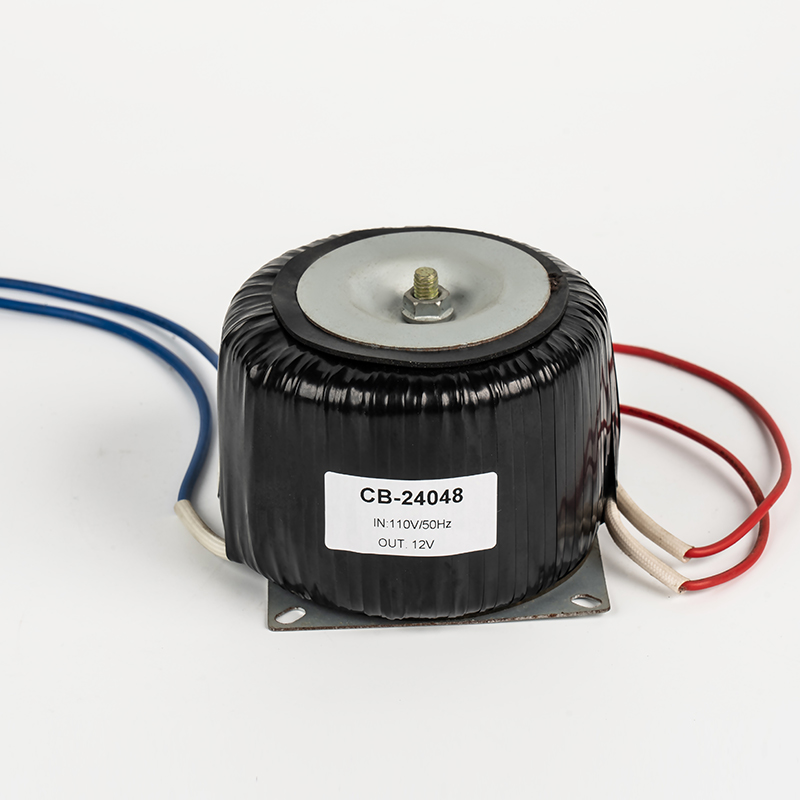
Low-frequency toroidal transformers typically operate in a 50Hz or 60Hz AC environment. Their iron core uses a toroidal structure, with windings evenly distributed on the core. Compared to traditional EI-type transformers, this structure allows for a more continuous magnetic circuit, reducing magnetic flux leakage and thus improving energy transfer efficiency.
Due to the high degree of magnetic circuit closure, the magnetic flux in low-frequency toroidal transformers is more stable during operation, which helps reduce voltage fluctuations and provides a more stable input condition for subsequent circuits.
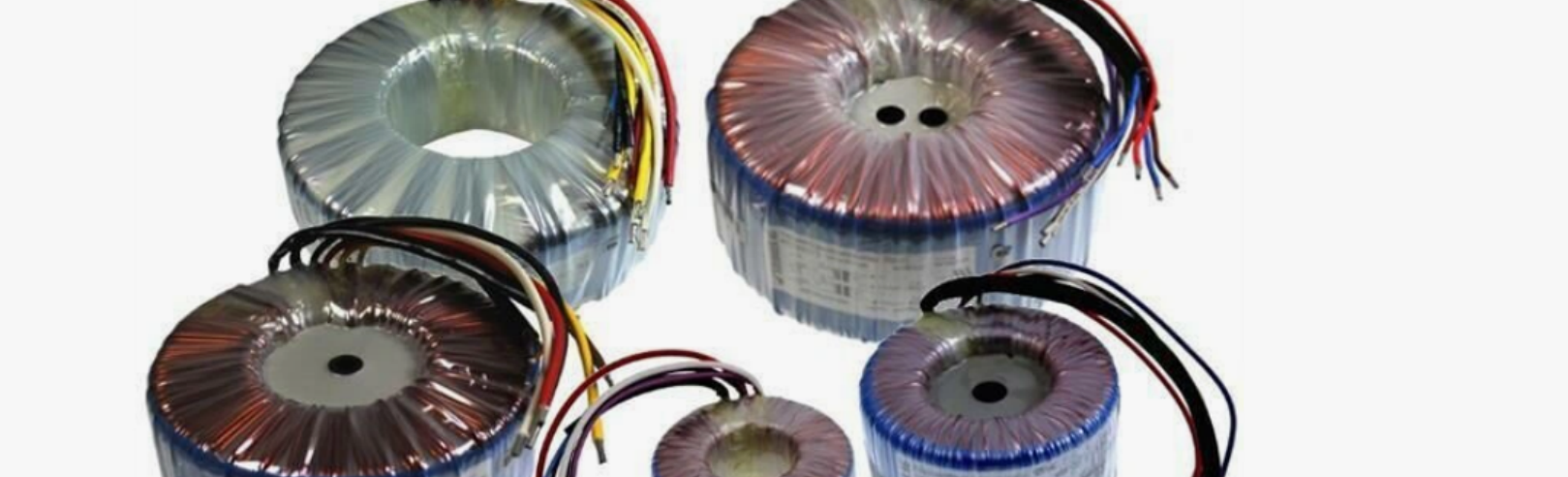
3. How Do Low-Frequency Toroidal Transformers Improve Power Supply Stability?
Firstly, low-frequency toroidal transformers have lower leakage inductance and losses. Low leakage inductance means reduced external magnetic field interference, minimizing the impact on surrounding circuits and thus reducing power supply noise. This is especially important for equipment sensitive to power quality.
Secondly, low-frequency toroidal transformers exhibit relatively small output voltage fluctuations under load changes. Their evenly distributed windings and low impedance ensure that the output remains relatively stable during sudden load changes or transient current variations, helping to improve the dynamic response capability of the power supply. Furthermore, low-frequency toroidal transformers exhibit lower mechanical vibration and noise. Traditional transformers may experience slight vibrations due to magnetostriction during operation, while the toroidal structure effectively reduces this phenomenon. This not only improves the user experience but also indirectly reflects its more stable operating state.
4. Impact on the overall performance of the power supply system
As a front-end component of the power supply system, the stable performance of the low-frequency toroidal transformer directly affects the performance of the entire system. A stable input voltage facilitates more efficient operation of rectification, filtering, and voltage regulation circuits, reducing the pressure on subsequent voltage regulation circuits, thereby improving overall efficiency and reliability.
In long-term operating equipment, power fluctuations can accelerate component aging. Low-frequency toroidal transformers, by providing a stable, low-interference power supply environment, help extend equipment lifespan and reduce maintenance frequency and failure rates.
5. Value demonstrated in typical application scenarios
In audio equipment, power supply stability directly affects sound quality. Low-frequency toroidal transformers, with their low noise and stable output, help reduce background noise and distortion. In industrial control systems, their stable power characteristics ensure the accuracy of control signals and prevent malfunctions. In medical and testing equipment, a stable and reliable power supply is a crucial prerequisite for ensuring data accuracy and safe equipment operation.
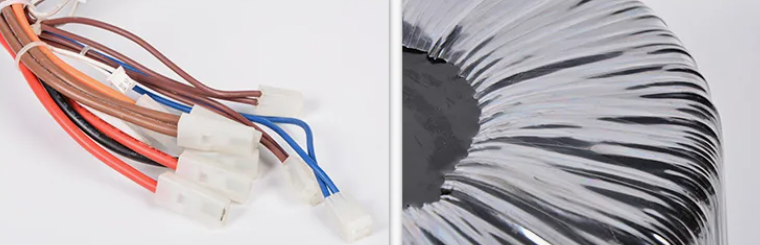
6. The significance of choosing low-frequency toroidal transformers
Choosing a high-quality low-frequency toroidal transformer is not only an investment in a single component but also a guarantee of the stability of the entire power supply system. Appropriate power margin, good heat dissipation conditions, and standardized installation methods can further amplify its advantages in terms of power supply stability.
Low-frequency toroidal transformers play a crucial role in power supply stability. With their continuous magnetic circuit structure, low leakage flux, low noise, and good load adaptability, they can provide a more stable and reliable basic power supply for the power system. For equipment that requires stable operation, high reliability, and long-term use, low-frequency toroidal transformers are not only important but often the key to improving overall power quality.


Welcome To CHUANGBIAO
Address : No.420-3, Sanbei East Road, Guanhaiwei Industrial Zone, Cixi City, Ningbo, Zhejiang, China
Contact
- Tel: +86 186 6825 0703
- Email: linjian@nbcbdz.com
About us
Products
Copyright © Ningbo Chuangbiao Electronic Technology Co., Ltd.
All Rights Reserved. EI Transformer Manufacturer


