
 English
 中文简体
中文简体Toroidal Transformer vs EI Transformer: Which Design Should You Choose?
2026-07-03
Content
- 1 Core Structure: How Toroidal and EI Designs Differ
- 2 Efficiency and Energy Loss Comparison
- 3 Noise, Vibration and Electromagnetic Interference
- 4 Size, Weight and Installation Space
- 5 Related Transformer Product Series
- 6 Cost and Manufacturing Trade-offs
- 7 Typical Applications for Each Transformer Type
- 8 How to Choose Between Toroidal and EI Transformer
- 9 Frequently Asked Questions
A toroidal transformer is the better pick when noise, size and efficiency matter most, while an EI transformer remains the more cost-effective and rugged option for heavy-duty, high-current or budget-driven projects. Toroidal cores typically reach 92 to 96 percent efficiency with noise levels under 25 dB, while EI-core units land around 90 to 94 percent efficiency but cost 20 to 35 percent less to produce at the same power rating. The right choice depends less on which technology is "better" and more on which trade-offs fit your application, and the sections below break down exactly where each design wins.
Core Structure: How Toroidal and EI Designs Differ
The physical shape of the core is what drives every other difference between these two transformer families. An EI transformer stacks E-shaped and I-shaped silicon steel laminations into a rectangular frame, with copper windings wound around the center limb. A toroidal transformer instead wraps a continuous strip of grain-oriented steel into a closed ring, then winds the copper evenly around the entire circumference of that ring.
| Comparison Point | EI Transformer | Toroidal Transformer |
| Core shape | Stacked E and I laminations, rectangular window | Single continuous wound ring core |
| Magnetic path | Has air gaps at lamination joints | Closed loop, virtually no air gap |
| Winding method | Bobbin-wound on a single limb | Wound around the full circumference |
| Manufacturing complexity | Simple, highly automated stamping and stacking | Requires ring-winding machines and skilled setup |
Because the toroidal core has no air gap, magnetic flux flows in a continuous loop with far less leakage. That single structural fact explains most of the efficiency, noise and size advantages described in the rest of this article.
Efficiency and Energy Loss Comparison
Efficiency is usually the deciding factor for equipment that runs continuously, such as UPS systems, audio amplifiers or medical devices. Because the toroidal core has a shorter, uninterrupted magnetic path, core loss and no-load loss are both lower than in an EI transformer of the same power rating.
| Metric | EI Transformer | Toroidal Transformer |
| Typical full-load efficiency | 90 percent to 94 percent | 92 percent to 96 percent |
| No-load (idle) loss | Baseline reference | Roughly 30 percent to 50 percent lower |
| Best power range | A few VA up to several kVA and above | A few VA up to around 5 to 10 kVA |
The efficiency gap seems small on paper, but on equipment that operates around the clock it translates into a measurable reduction in electricity cost and heat generation over the product's service life.
Noise, Vibration and Electromagnetic Interference
Magnetostriction, the tiny expansion and contraction of steel laminations under an alternating field, is the main source of transformer hum. EI cores have more lamination joints and a rectangular geometry that amplifies this vibration, while the closed ring of a toroidal core dampens it considerably.
- EI transformer audible noise under load typically falls in the 35 to 50 dB range depending on power and mounting.
- Toroidal transformer audible noise is usually under 25 dB, often described as "almost silent" in hi-fi and medical applications.
- The toroidal ring shape also radiates a lower external magnetic field, which reduces electromagnetic interference with nearby sensitive circuits.
- EI transformers can still meet strict EMI standards with added shielding, but this adds cost and weight that a toroidal design avoids by default.
This is why audio equipment, precision test instruments and medical devices favor a toroid isolation transformer, while general industrial control panels are perfectly comfortable with standard EI or BK transformer noise levels.
Size, Weight and Installation Space
For the same power rating, a toroidal transformer is generally 30 to 50 percent lighter and occupies roughly 40 percent to 50 percent less volume than a comparable EI transformer. The low-profile, flat disc shape also makes it easier to mount horizontally in thin enclosures, something a tall EI frame cannot always match.
| Factor | EI Transformer | Toroidal Transformer |
| Relative weight at same VA rating | Heavier | 30 percent to 50 percent lighter |
| Relative footprint | Larger rectangular block | Flat disc, low profile |
| Mounting flexibility | Vertical or chassis mount, standard brackets | Center-bolt mount, works well in tight enclosures |
Related Transformer Product Series
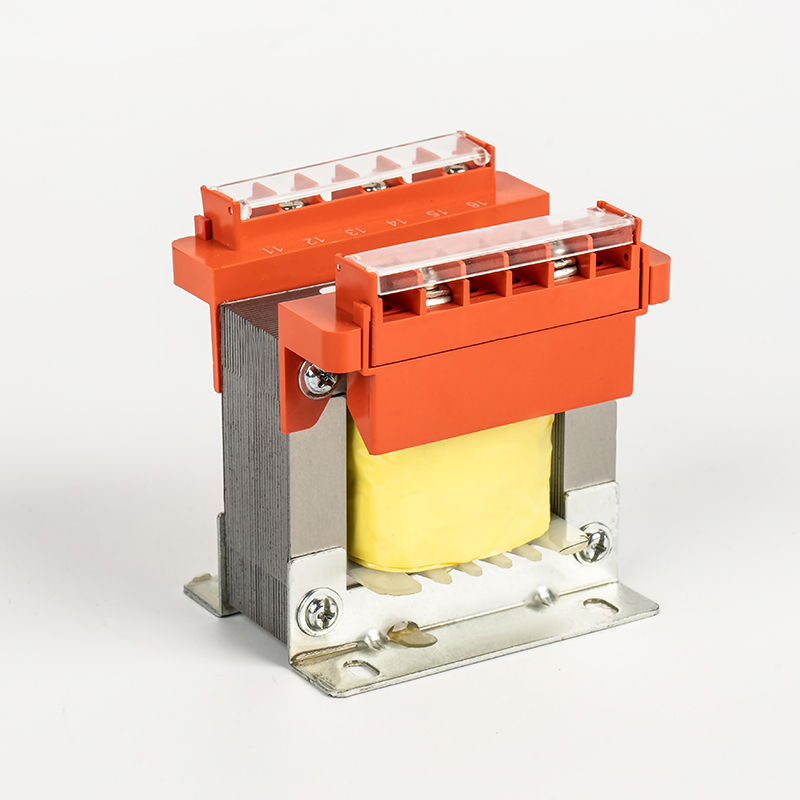
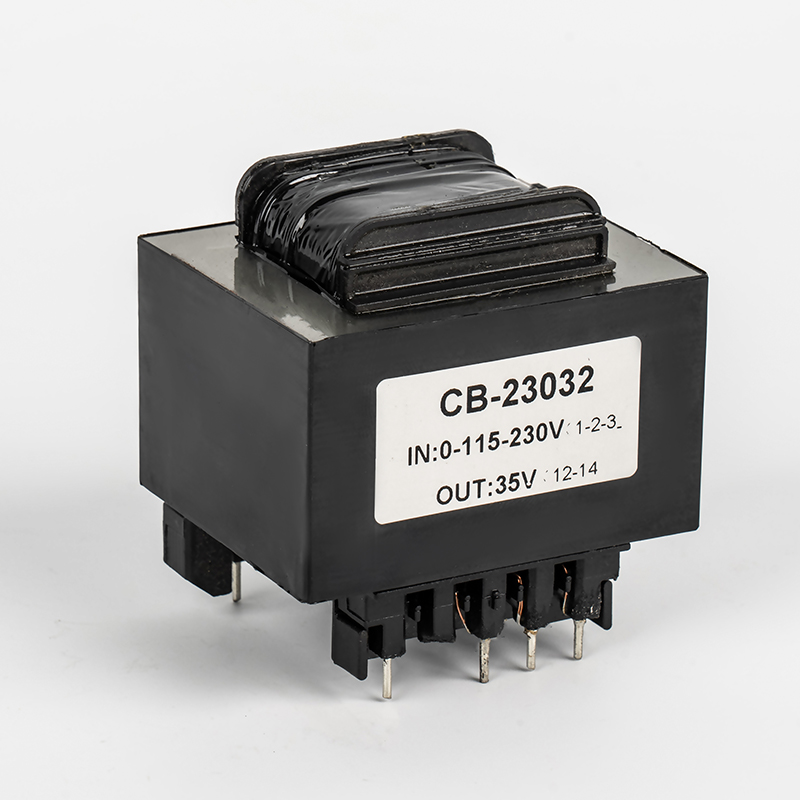
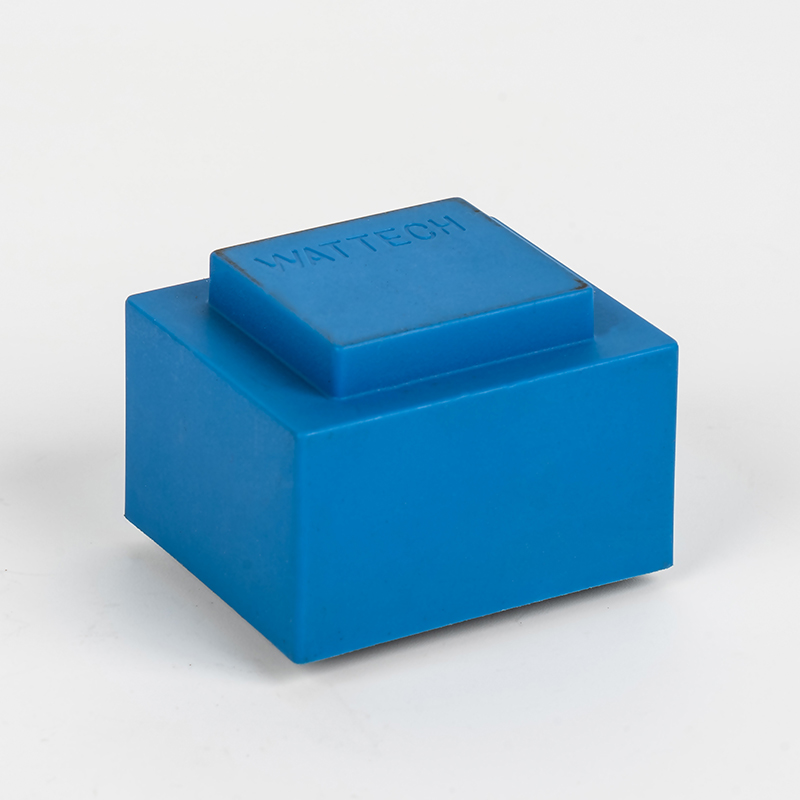
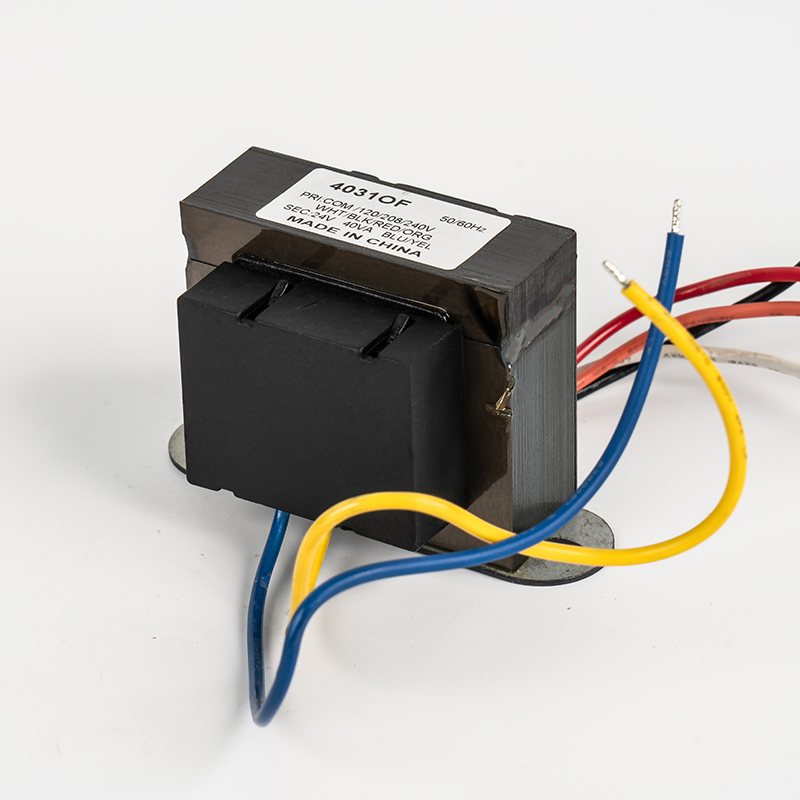
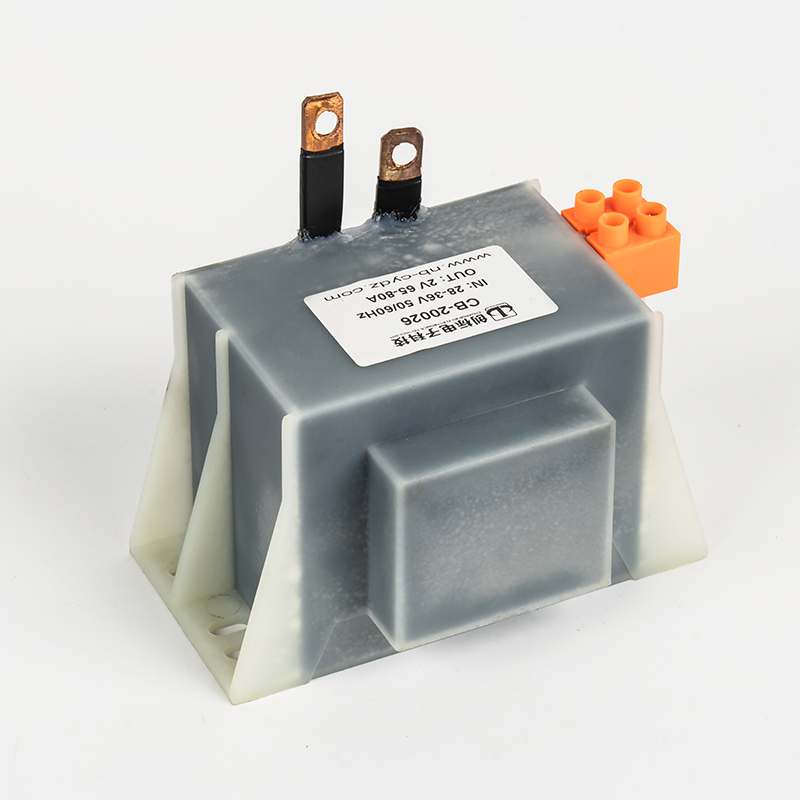
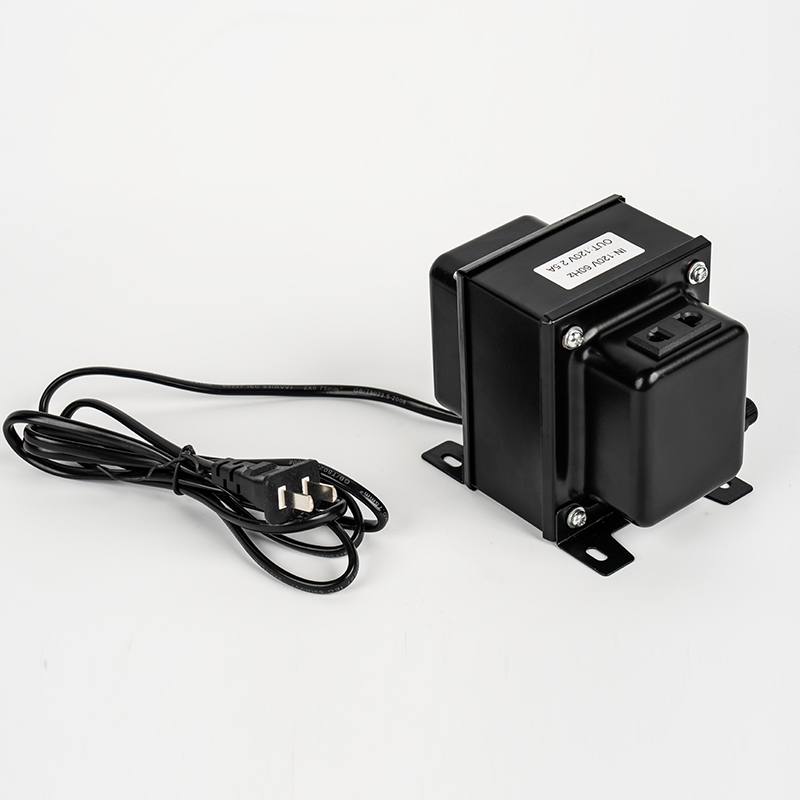
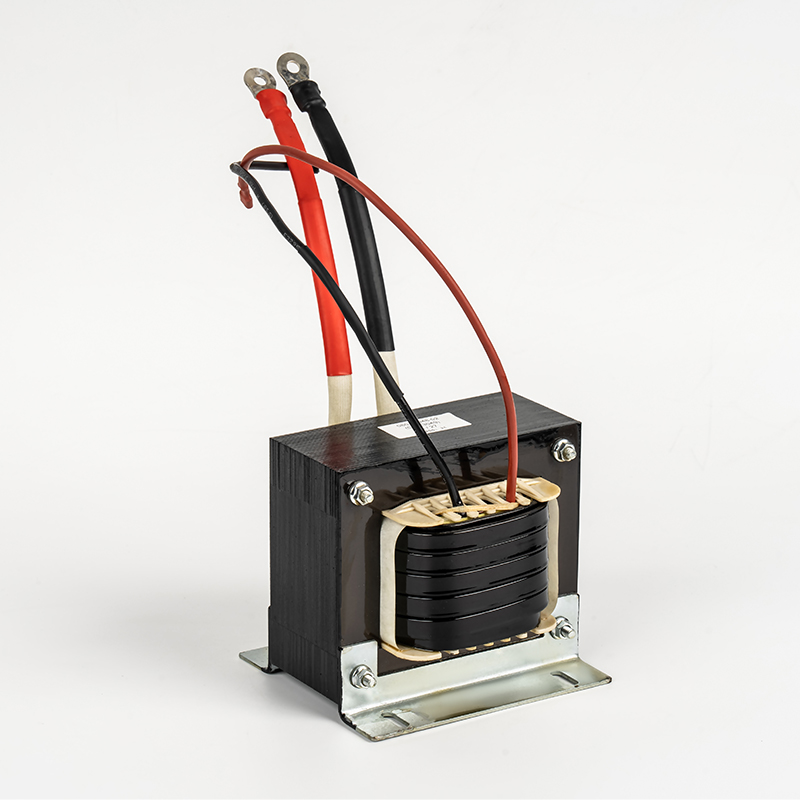
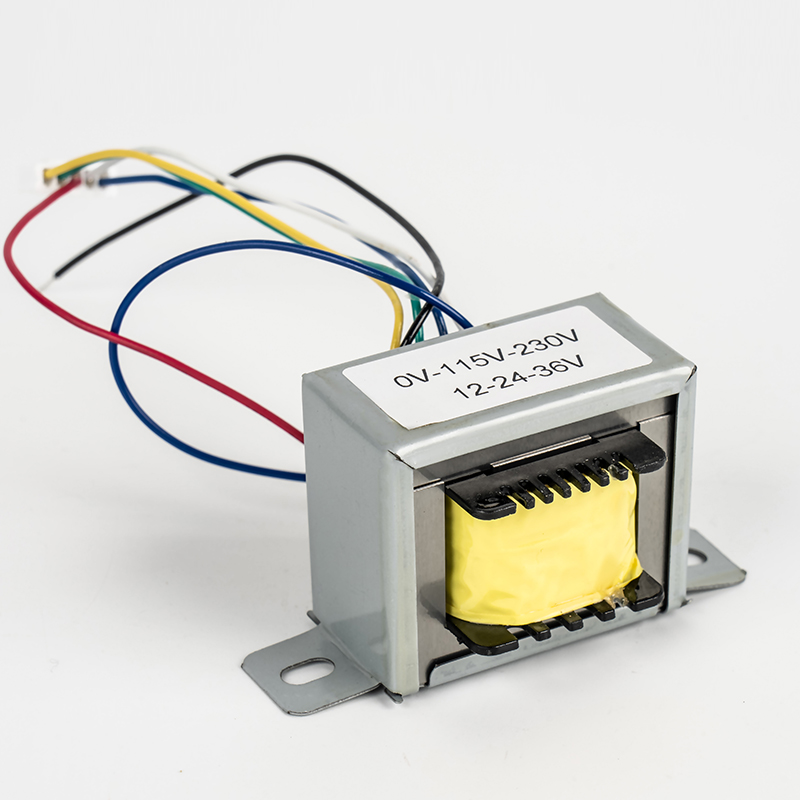
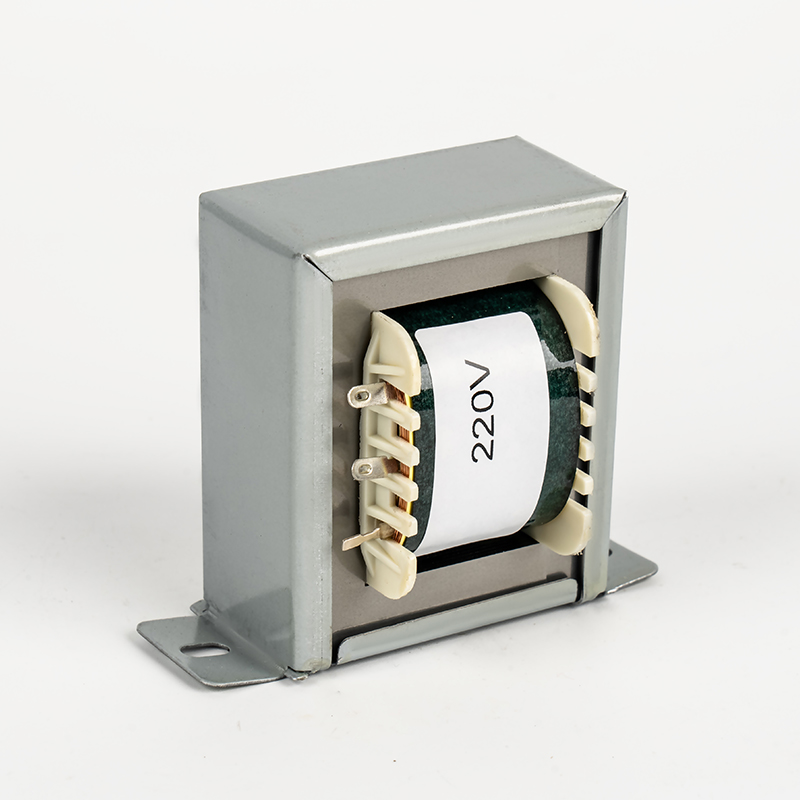
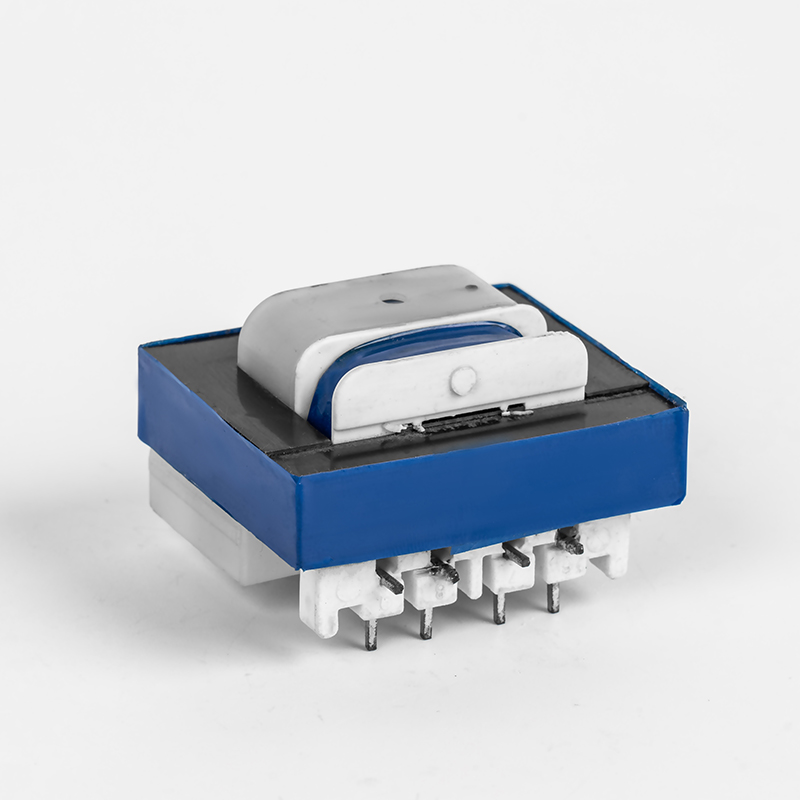
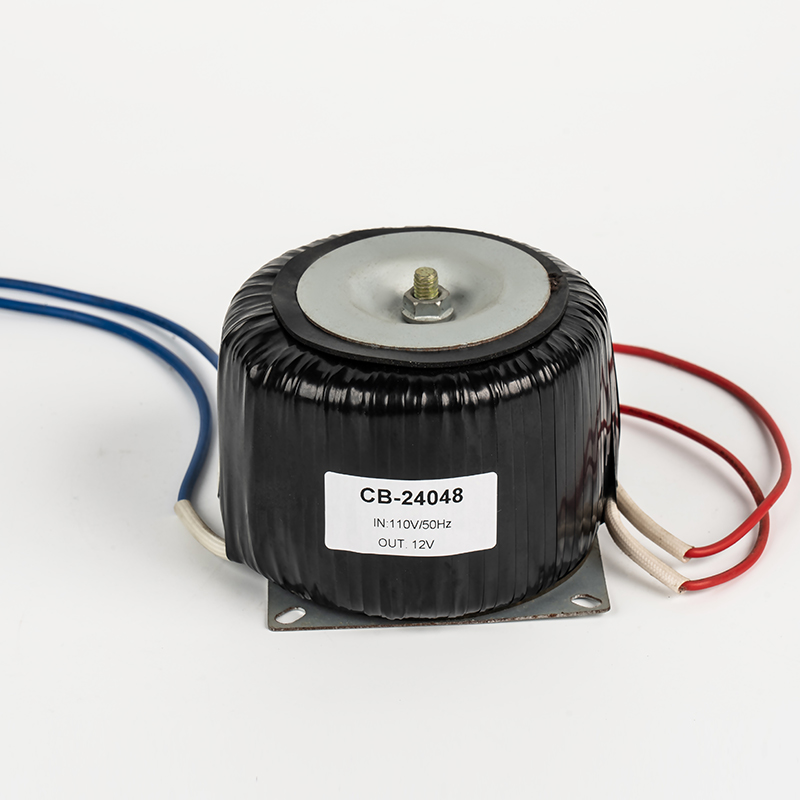
Both EI-based and toroidal-core designs are built as part of a wider low frequency transformer product line, covering control, isolation, inverter and power applications. The examples below show how the same core technologies are packaged for different industrial and electronic uses.
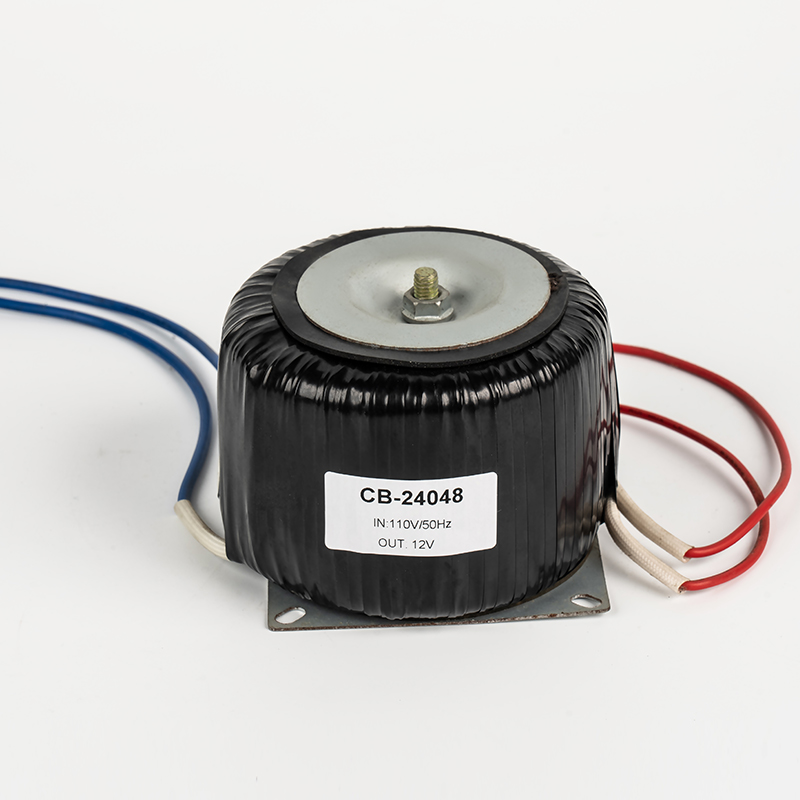
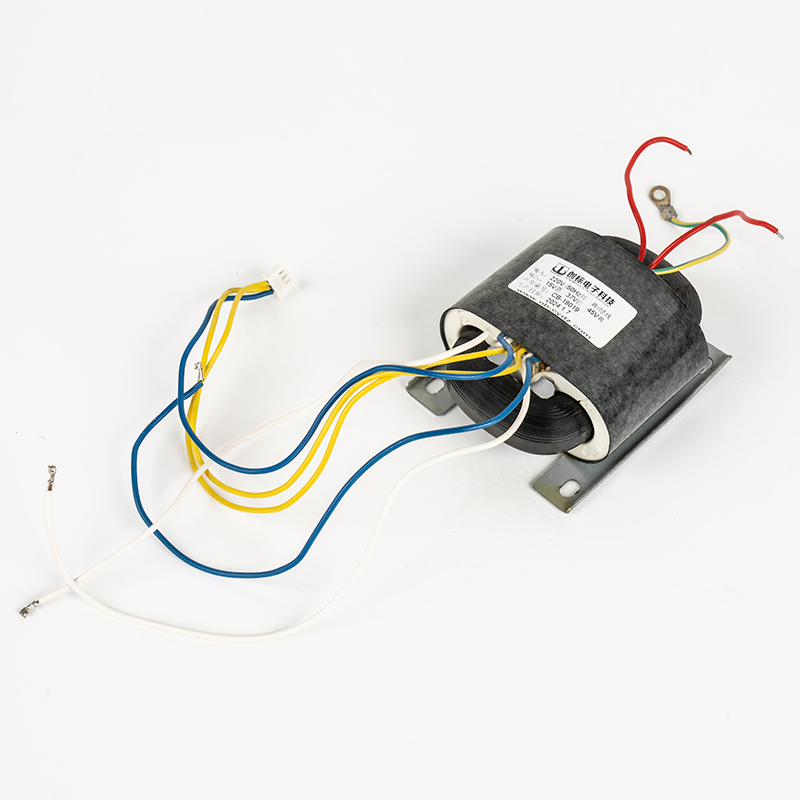
Toroidal Transformer
Toroidal Series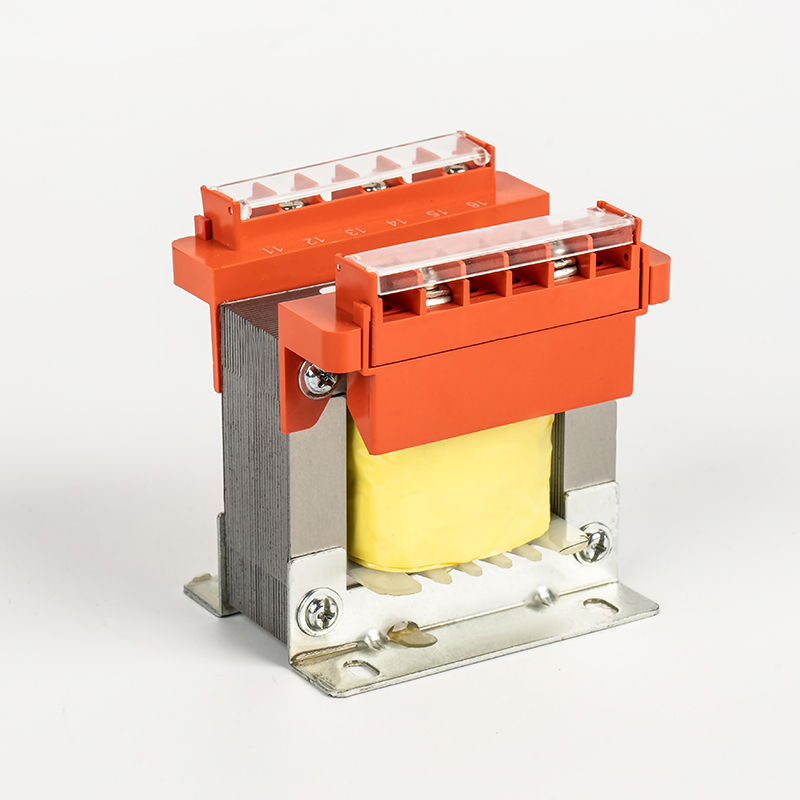
BK Control Transformer
EI Control Series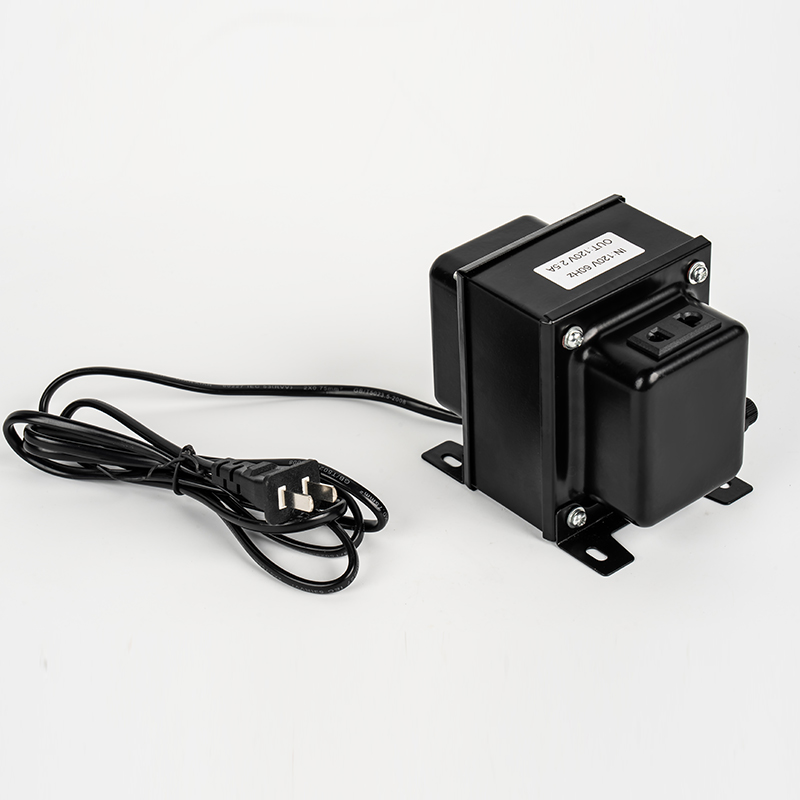
Isolation Transformer
Isolation Series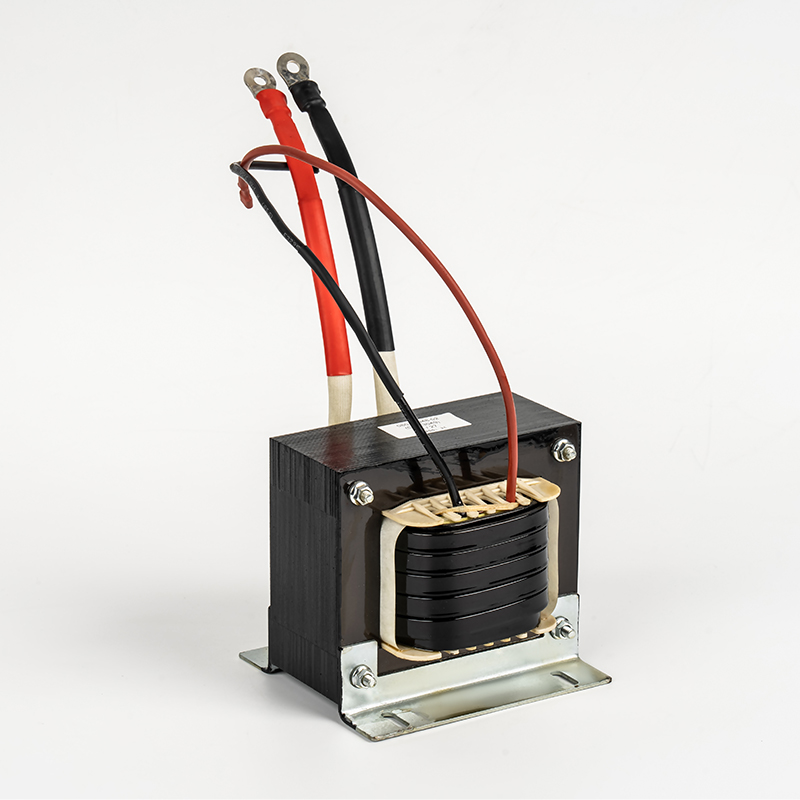
Inverter Transformer
Inverter Series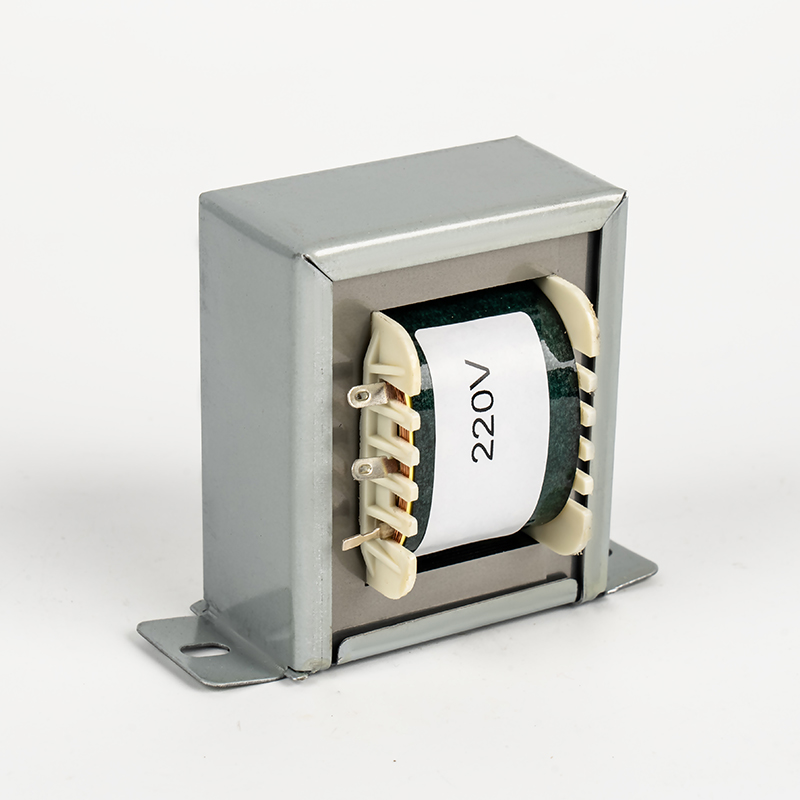
Power Transformer
EI Power SeriesCost and Manufacturing Trade-offs
Material and labor cost is where EI transformers keep their advantage. E and I laminations are stamped in bulk on automated presses, and bobbin winding can run on high-speed machines with minimal manual intervention. Toroidal cores require slower ring-winding equipment and more careful handling, which typically adds 20 percent to 35 percent to the unit cost at the same power rating.
- EI transformers scale more cheaply into high-volume, price-sensitive products such as basic control transformers and general power supplies.
- Toroidal transformers cost more per unit but can lower total system cost when their smaller size reduces enclosure, shielding or cooling requirements.
- For very high current or very high power designs, EI and other laminated core structures remain easier and cheaper to scale up than toroidal winding.
Typical Applications for Each Transformer Type
| Application | Recommended Type | Why |
| Industrial control panels, PLC power supplies | EI or BK control transformer | Rugged, cost-effective, easy to service in the field |
| Air conditioners and appliance control boards | EI transformer | Handles inrush current well at low cost |
| Hi-fi audio amplifiers | Toroidal transformer | Low hum, low EMI, protects signal quality |
| Medical and precision instruments | Toroid isolation transformer | Low interference plus safe electrical isolation |
| UPS and inverter systems | Toroidal transformer or EI inverter transformer | Depends on power level and space constraints |
How to Choose Between Toroidal and EI Transformer
Work through these four questions in order and the right core type usually becomes obvious.
- Is noise or vibration a concern for the end user? If yes, lean toward a toroidal transformer.
- Is installation space tightly limited, such as in a thin enclosure or wall-mounted unit? A toroidal design saves volume and weight.
- Is the project extremely cost-sensitive or produced in very high volume? An EI or square transformer factory line usually wins on price.
- Does the application involve very high current, heavy inrush, or a very high power rating? EI and related laminated-core designs are typically easier to scale safely.
Many manufacturers, including EI transformer factories that also produce toroidal and BK control transformer lines, can supply both technologies from the same facility, which makes it easier to prototype with one design and switch later if requirements change.
Frequently Asked Questions
Is a toroidal transformer always more efficient than an EI transformer?
In most low and medium power ranges, yes, because the closed core reduces flux leakage. At very high power or very high current, laminated EI-style cores can close the gap and are often easier to cool.
Can a toroidal transformer replace an EI transformer directly?
Often yes for the same voltage and VA rating, but mounting method, inrush current behavior and price should be checked before substituting one for the other in an existing design.
Which type is better for a low frequency transformer used in control panels?
An EI or BK control transformer is usually preferred here because of its lower cost, simple servicing, and strong tolerance for switching transients.
Do toroidal transformers need special mounting hardware?
Yes, they typically use a center bolt with rubber isolation washers to secure the ring core and further reduce vibration transfer to the enclosure.


Welcome To CHUANGBIAO
Address : No.420-3, Sanbei East Road, Guanhaiwei Industrial Zone, Cixi City, Ningbo, Zhejiang, China
Contact
- Tel: +86 186 6825 0703
- Email: linjian@nbcbdz.com
About us
Products
Copyright © Ningbo Chuangbiao Electronic Technology Co., Ltd.
All Rights Reserved. EI Transformer Manufacturer


