
 English
 中文简体
A step-down transformer has more loops on the primary coil, not the secondary. The primary winding is the input side, and it has a higher number of turns than the secondary winding. That turn relationship lowers the AC voltage at the output while the secondary current rises to deliver roughly the same power, minus losses.
This is a turns-ratio question, not a “which side looks bigger” question. A transformer can be physically small and still step down voltage. What matters is the ratio of primary turns (Np) to secondary turns (Ns). When Np is greater than Ns, the transformer is step-down. When Ns is greater than Np, it is step-up. When Np equals Ns, it is normally an isolation transformer with approximately 1:1 voltage.
Step-Down Transformer Coil Turns at a Glance
The primary coil has more loops. The secondary coil has fewer loops and therefore produces a lower voltage. The table below separates the turn count from related design details such as current, wire gauge, and core size.
| Property | Step-down transformer | Step-up transformer |
|---|---|---|
| Primary turns | More loops | Fewer loops |
| Secondary turns | Fewer loops | More loops |
| Secondary voltage | Lower than primary | Higher than primary |
| Secondary current | Higher for the same power | Lower for the same power |
| Common use | Control panels, low-voltage equipment, lighting circuits | Voltage raising stages, transmission, test equipment |
Why More Primary Loops Lower the Output Voltage
The voltage per turn is set by the changing magnetic flux in the core. Because both windings link the same core flux, the volts per turn are approximately equal. With more primary turns, the primary voltage is spread over more turns. The secondary, with fewer turns, produces a proportionally lower voltage.
The turns ratio is usually written as:
- Np / Ns = Vp / Vs
- Np = primary turns, Ns = secondary turns
- Vp = primary voltage, Vs = secondary voltage
A practical example
Suppose a transformer is rated 480 V primary and 120 V secondary. The voltage ratio is 4:1, so the primary must have four times as many turns as the secondary. If the secondary has 200 turns, the primary should have about 800 turns. In a real design, the exact number depends on core material, frequency, allowable flux density, regulation target, and safety margins.
The inverse relationship also matters. If the secondary voltage is one quarter of the primary voltage, the secondary current can be about four times the primary current for the same power, ignoring losses. That is why a low-voltage secondary winding often uses thicker wire even though it has fewer turns.
Does the Coil With More Loops Carry More Current?
No. In a step-down transformer, the coil with more loops usually carries less current. The primary side operates at the higher voltage and lower current. The secondary side operates at the lower voltage and higher current. Power conservation explains the tradeoff: voltage goes down, so current goes up for the same load power.
This distinction matters during specification. A buyer may see a large secondary lead wire and assume the secondary has more turns. That is not a safe conclusion. The thicker wire is often there to reduce copper loss and temperature rise under higher current. The primary may have more turns of finer wire because it runs at higher voltage and lower current.
Primary winding
Higher voltage, lower current, more turns in a step-down design.
Secondary winding
Lower voltage, higher current, fewer turns in a step-down design.
Core
Links both windings magnetically; it does not decide the turns ratio by itself.
How to Identify a Step-Down Transformer in Practice
Check the nameplate first. Do not count turns on a sealed unit, and do not apply mains voltage to an unknown winding just to see what happens. The nameplate should show primary and secondary voltage, frequency, VA rating, and often a wiring diagram or lead color code.
- Compare the voltage labels: a lower secondary voltage indicates a step-down design.
- Look for markings such as “PRI” and “SEC” or input and output leads.
- Measure winding resistance only with suitable equipment and safe isolation; a higher-resistance winding is often the higher-voltage, lower-current side, but this is not a universal rule.
- Confirm with the datasheet or manufacturer before connecting the transformer to a circuit.
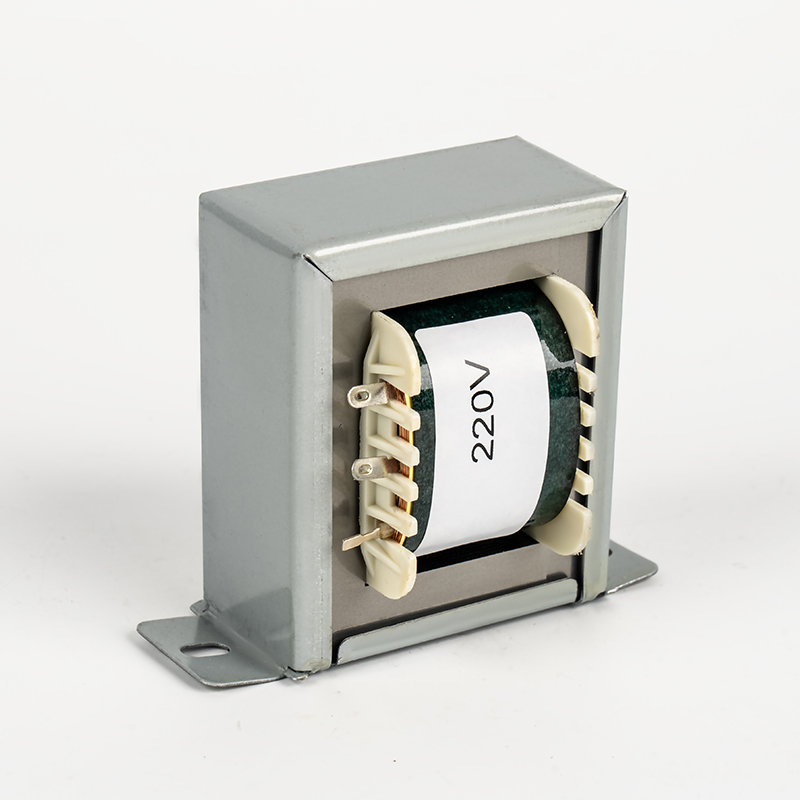
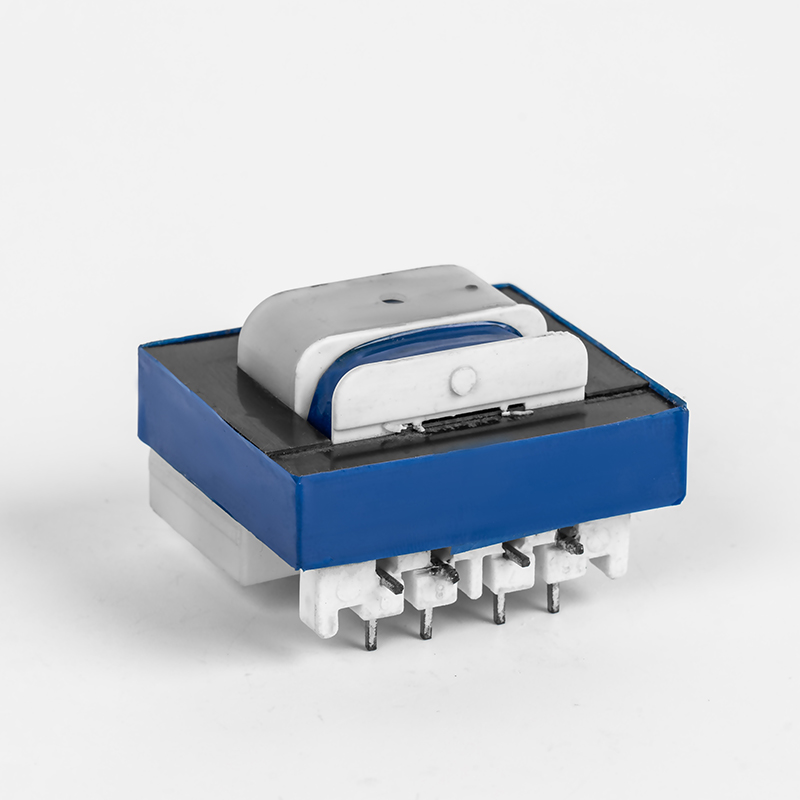
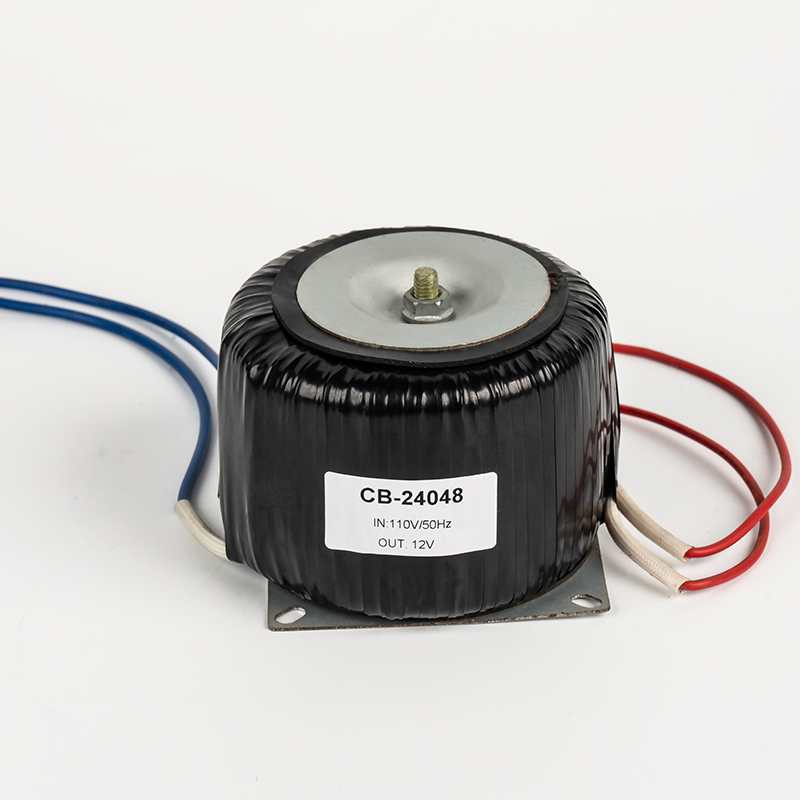
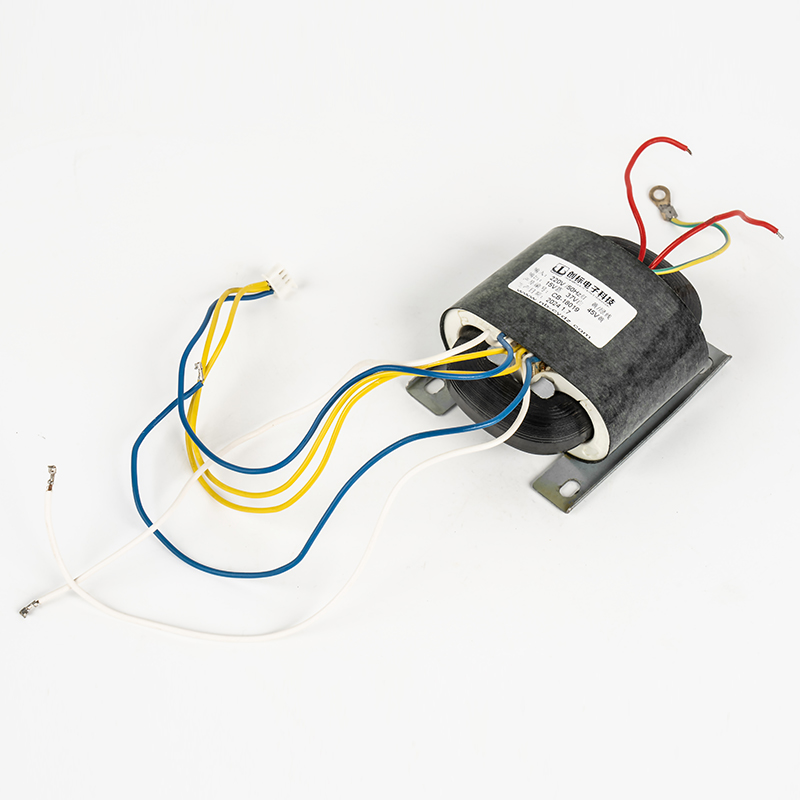
For custom EI, toroidal, C-core, control, medical, or audio transformers, the design review should confirm the turns ratio, insulation class, temperature rise, and safety approvals together. The manufacturer profile at the about page describes transformer design, procurement, manufacturing, and testing controls, which is useful when a standard catalog part does not fit the application.
Specification and Purchasing Checks for Step-Down Transformers
The turns ratio is only one line on the datasheet. A practical order should confirm the full electrical and mechanical envelope before production or installation.
- Primary and secondary voltage, frequency, and phase.
- VA rating, duty cycle, and expected overload conditions.
- Voltage regulation and no-load versus loaded output voltage.
- Insulation class, dielectric strength, and creepage distance.
- Temperature rise, ambient temperature, and cooling method.
- Core type: EI, toroidal, C-core, or another construction.
- Mounting, termination, lead length, and agency requirements.
For example, a 240 V to 24 V transformer may show a no-load output above 24 V because of winding resistance and core losses. If the load is sensitive, ask for regulation data rather than relying on the nominal ratio alone. For medical or industrial control use, ask about insulation, screening, and fault tolerance. A manufacturer with in-house design and quality control can review these points before a sample is built. For special ratings or non-standard windings, the customization inquiry path is the appropriate starting point.
FAQ: Step-Down Transformer Coils
Which coil has more loops in a step-down transformer?
The primary coil. It has more turns than the secondary, so the secondary voltage is lower.
Does more loops always mean higher voltage?
It means higher voltage relative to the other winding. The winding with more turns has the higher voltage. If that winding is the secondary, the transformer is step-up, not step-down.
Can a step-down transformer be reversed to step up voltage?
Sometimes, but not always. A transformer designed for step-down may have different insulation, winding geometry, and safety approvals. Reversing it can exceed the intended voltage or temperature rise. Confirm with the manufacturer before doing it.
Why does the secondary wire sometimes look thicker?
Because lower voltage usually means higher current for the same power. The thicker wire reduces copper loss and temperature rise. It is not evidence that the secondary has more turns.
Bottom Line
A step-down transformer has more loops on the primary coil. The secondary has fewer turns, so it delivers a lower voltage and, for the same power, a higher current. Use the turns ratio to confirm the design, then check the nameplate, regulation, insulation, and thermal ratings before specifying or installing the part.