
 English
 中文简体
How to Specify a Transformer for LED Drivers: Insulation, Heat, Sourcing
2026-11-06
Content
- 1 What the Transformer Actually Does Inside an LED Driver
- 2 LED Driver or Transformer-Based Supply: Sorting Out the Terms
- 3 Specifications to Fix Before You Place the Order
- 4 Heat, Insulation and the Ten-Degree Rule
- 5 Dimming, Flicker and Cold-Start Behaviour
- 6 Compliance Paperwork That Decides Acceptance
- 7 Sourcing Notes From a Transformer Factory Floor
- 8 Frequently Asked Questions
Most LED lighting returns are blamed on the diodes, but the cause often sits a few centimetres away: the magnetic part of the driver. When a batch of luminaires starts flickering at 30% dim, humming in a hotel corridor, or failing hipot at the customer's incoming inspection, the transformer, not the LED, is usually where the tolerance was lost.
Here is the short version before the detail. For an isolated mains driver up to roughly 150 W, a ferrite flyback transformer with documented creepage, Class B or Class F insulation and a 100% dielectric test is the safe baseline. For 12 V AC low-voltage lighting, a 50/60 Hz EI lamination transformer still wins on cost per watt. Everything below explains the reasoning, the numbers worth writing into a purchase order, and the questions that separate a real magnetic supplier from a trader with a catalogue.
What the Transformer Actually Does Inside an LED Driver
An LED needs a controlled current, not a fixed voltage, so the driver has to regulate. The transformer supports three jobs at once: it isolates the mains from the output, it converts the voltage to a level the output stage can work with, and in a flyback design it stores energy between switching cycles.
That last point is the one buyers underestimate. In a flyback, the transformer behaves more like a coupled inductor than a classic voltage converter. The air gap in the core sets how much energy is stored per cycle, and the gap tolerance decides whether the primary peak current stays inside the controller's limit at full load and high line voltage. Two samples that look identical can behave very differently if the gap is set by grinding feel rather than by inductance measurement.
The reason a driver transformer is small is frequency. A ferrite core running at 30 kHz to 100 kHz (sometimes higher in compact designs) transfers the same power as a laminated core at 50 Hz using a fraction of the volume. Swap the ferrite transformer for an iron one and the driver becomes a power supply the size of a shoebox, which is exactly what the older halogen electronic transformer generation looked like.
Non-isolated designs, typically buck or linear topologies, may use no transformer at all. That is a legitimate cost decision for double-insulated fixtures with a fully enclosed SELV output, but it changes the safety argument, the surge behaviour and the EMI profile. Know which architecture you are buying before you argue about price per unit.
LED Driver or Transformer-Based Supply: Sorting Out the Terms
Sales language blurs four or five different products into one word. When a specification says "transformer for LED driver", confirm which of the following is really meant, because the test criteria and the failure modes are not the same.
| Type | What it does | Typical application | Common field problem |
|---|---|---|---|
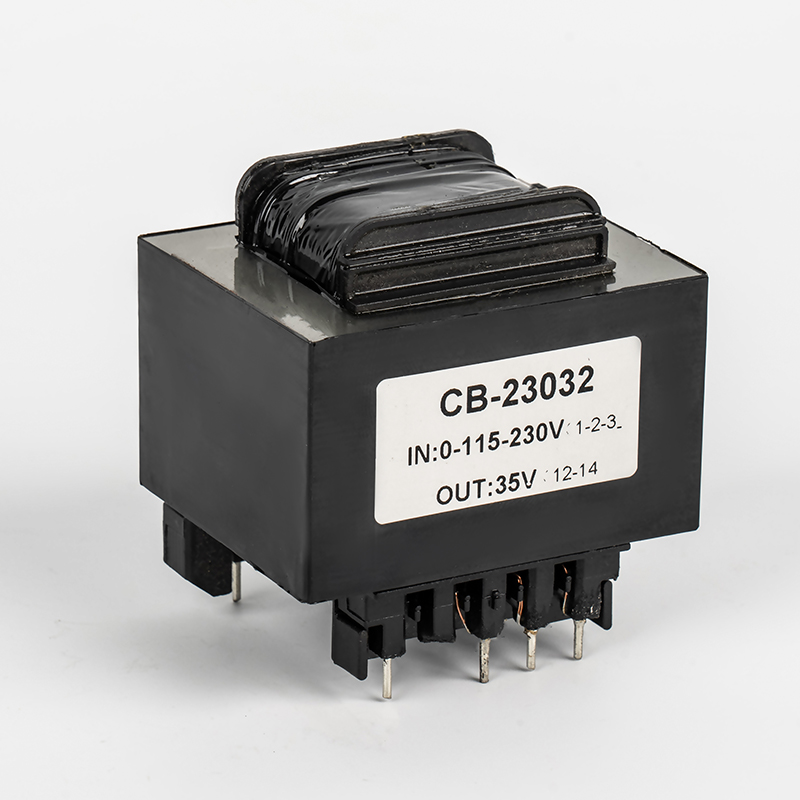
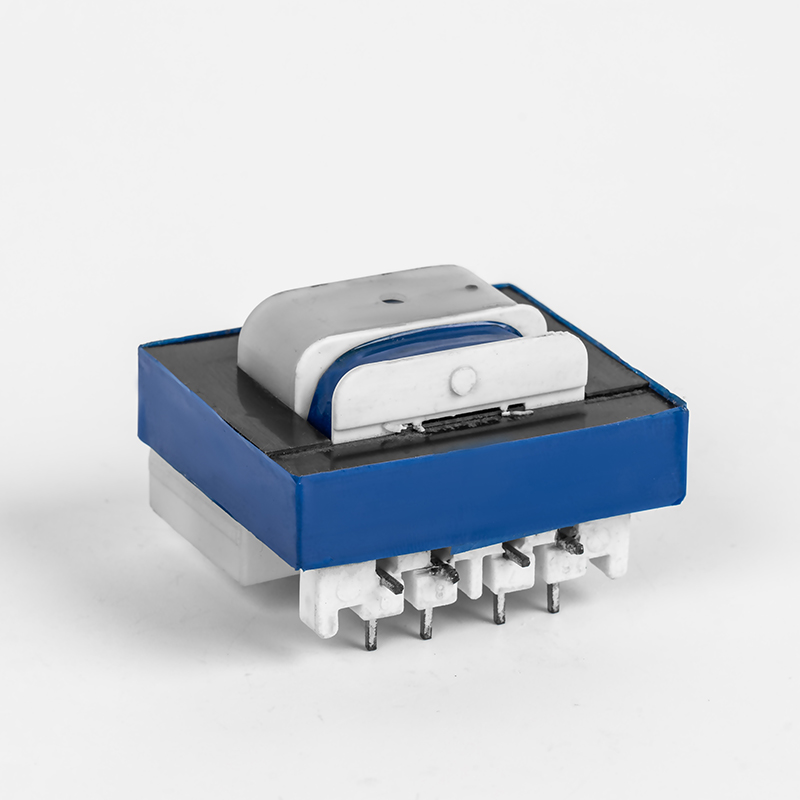
| High-frequency ferrite transformer (inside the driver) | Isolation plus energy transfer at 30–100 kHz; part of a switch-mode driver | Isolated constant-current drivers, roughly 5–150 W | Gap tolerance drift; leakage inductance ringing and EMI |
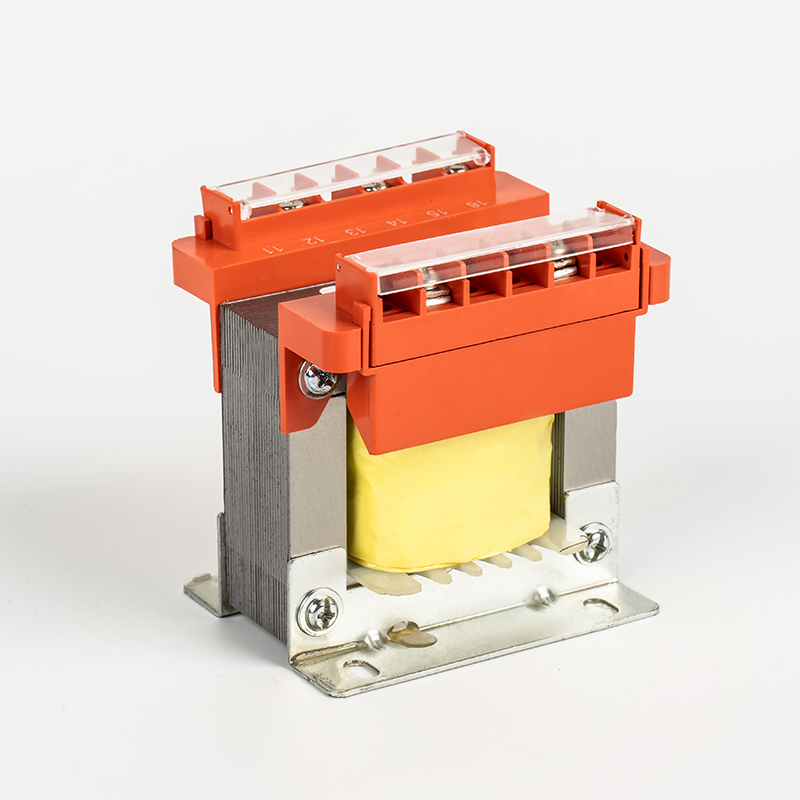
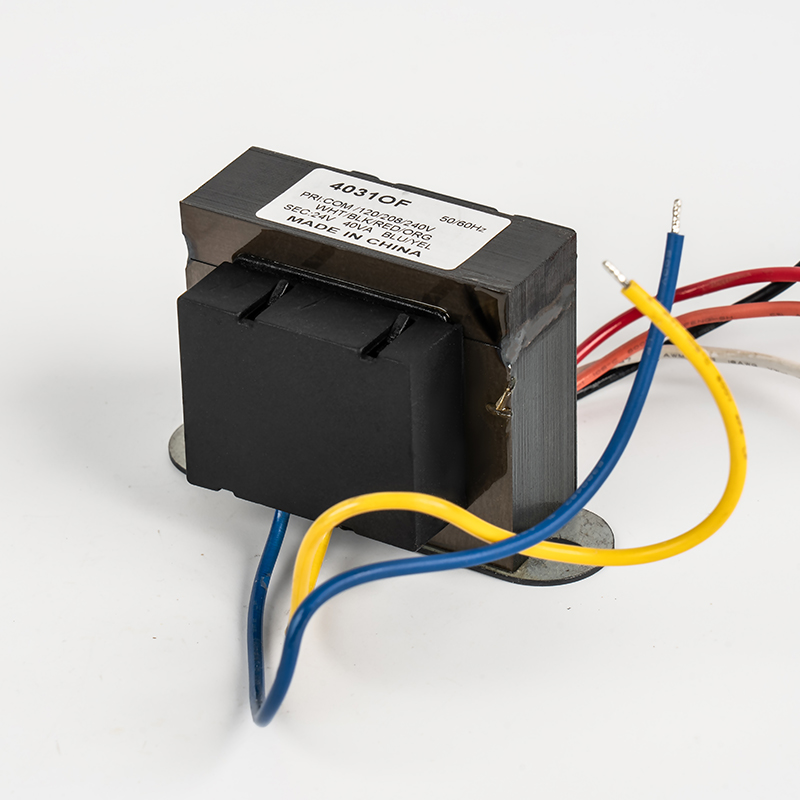
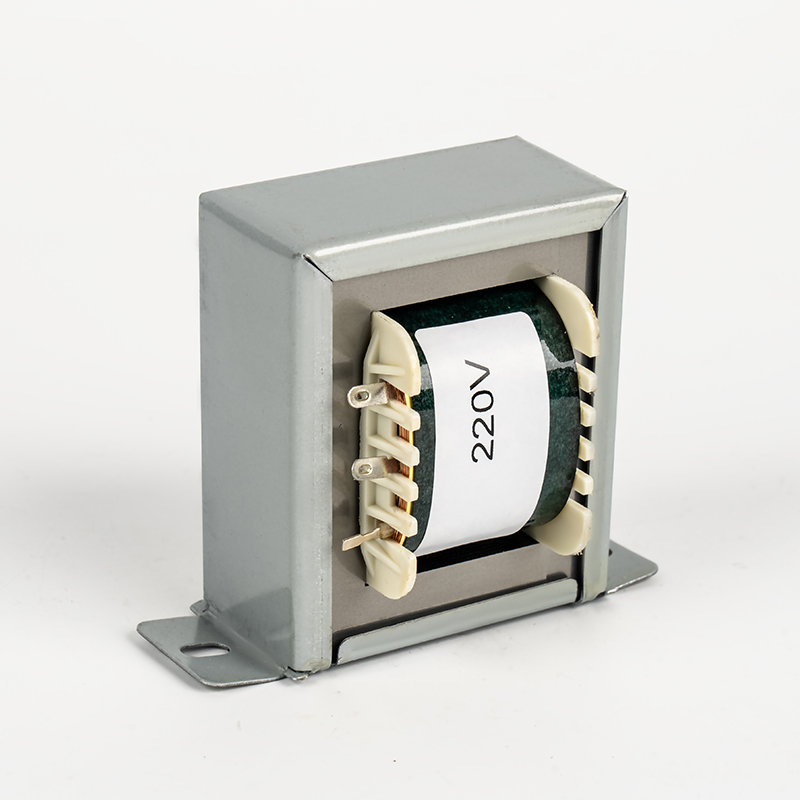
| 50/60 Hz EI lamination transformer | Steps 120 V or 230 V down to 12 V or 24 V AC | Magnetic low-voltage track and garden lighting | High inrush current; output sag on long cable runs |
| Electronic transformer (AC to AC) | Switch-mode conversion to about 11.5–12 V AC | Retrofit of halogen fixtures to LED lamps | Minimum-load flicker; chatter with leading-edge dimmers |
| Constant-voltage LED driver | Regulated 12 V or 24 V DC output | LED strips, cabinet and cove lighting | Voltage drop on long runs; overload at end of strip |
| Constant-current LED driver | Fixed output current, for example 350, 500 or 700 mA | COB and high-power LED modules | Mismatch with module forward voltage bin |
The practical consequence: a 12 V AC transformer and a 12 V DC driver are not interchangeable, even though both carry "12 V" on the label. Feeding a DC strip from an AC transformer gives visible 100/120 Hz flicker; feeding an AC halogen fixture from a DC driver usually means it simply does not light.
Specifications to Fix Before You Place the Order
Vague drawings are the root of most disputes. These eight items turn a sample into a repeatable part, and each one is cheap to specify and expensive to discover late.
- Primary inductance and turns ratio with tolerance. State the measured value and the allowed band, commonly ±10%. Loose inductance shifts peak current and pushes the controller into current limit at high line.
- Core material and gap. Name the ferrite grade and specify the gap through inductance, not through a mechanical dimension alone. "About 0.5 mm" is not a specification.
- Insulation class. Class B (130 °C) is the minimum for most indoor drivers; Class F (155 °C) is worth the small premium for sealed enclosures or 50 °C+ ambient.
- Creepage and clearance. At 250 V working voltage and pollution degree 2, reinforced insulation typically calls for creepage on the order of 6 mm. The distance is usually lost at the bobbin flange and the wire exit, not in the middle of the winding.
- Dielectric strength. Around 3.0 kV AC for basic isolation and 3.75 kV AC for reinforced designs, applied as a routine 100% test rather than a one-off type test, with the trip current stated.
- Leakage inductance limit. Too much leakage means the clamp network dissipates more heat, ringing gets worse and radiated EMI rises without any change to the schematic.
- Thermal data. Winding resistance at 20 °C plus the permitted temperature rise lets the customer verify the part inside their own housing instead of trusting a datasheet taken on an open bench.
- Documentation package. Insulation class certificate, hipot log, RoHS and REACH declarations, and a written change notification clause covering core, wire and bobbin suppliers.
Heat, Insulation and the Ten-Degree Rule
A transformer rarely fails because it runs 5 °C warm on the bench. It fails because the bench was 25 °C and the ceiling void is 60 °C. As a working rule, every 10 °C of extra hot-spot temperature roughly halves the life of the insulation system, so a design that looks comfortable in the lab can be marginal in a sealed downlight.
Measure at thermal equilibrium, not after three minutes. Winding hot-spot temperature is what ages the enamel, and it is always higher than the average surface reading an infrared gun shows on the core. Vacuum varnish impregnation helps twice over: it binds the winding so lamination and winding buzz drops, and it improves heat transfer from the inner layers to the outside.
High frequency adds a second thermal wrinkle. At 100 kHz, AC resistance in a single thick strand can be several times the DC value, so designers move to multiple strands or litz wire. If a quotation comes back with a single heavy gauge primary, ask how the AC resistance was accounted for.
Dimming, Flicker and Cold-Start Behaviour
Dimming is where magnetic and electronic designs diverge most visibly. Leading-edge (TRIAC) dimmers need a minimum load and a clean current path; a transformer that is undersized for the connected load will buzz, flicker or drop out at the bottom of the dim range. If the fixture must dim below 10%, state that as a test condition, not as an aspiration.
Flicker is measurable. Percent flicker and flicker index are driven by the ripple on the output, which for a single-stage driver sits at twice the mains frequency unless enough bulk capacitance or a ripple-cancelling stage is present. Cameras and slow-motion phone footage expose this faster than any datasheet. For broadcast, retail and architectural projects, put a flicker figure in the specification and test with a photometer rather than by eye.
Cold start is the other quiet risk. Toroidal and larger laminated transformers can draw an inrush current many times the rated figure for the first few cycles, which trips breakers when a dozen fixtures switch on together. Ask for the inrush curve, then decide whether a fuse, an NTC or a relay-based soft start belongs in the bill of materials.
Compliance Paperwork That Decides Acceptance
As a component, the transformer is judged through the driver it sits in. For lighting controlgear in Europe, the relevant standards are the IEC/EN 61347 series, with 61347-2-13 covering DC or AC supplied electronic controlgear for LED modules; safety isolating transformers fall under the EN 61558 series. In North America, UL 8750 sits alongside the power supply and Class 2 requirements that apply to the output. None of that replaces a component-level file, but a supplier who cannot describe which clause their creepage figures come from has never been through a certification review.
There is also the change-control angle. Because the driver certificate lists the magnetic construction, switching the core or wire supplier without notifying the customer can invalidate a test report quietly. A supplier who treats a bobbin change as a routine purchasing decision is a supply chain risk, however attractive the unit price looks.
Sourcing Notes From a Transformer Factory Floor
Most quality problems in this category come from three places: gap consistency, winding discipline and insulation handling at the margins. None of them show up in a price comparison, and all of them show up in a hipot log after six months of production.
Ningbo Chuangbiao Electronic Technology has been winding EI transformers and related designs since 2010, with a 5,000 m² plant, more than 50 staff and an in-house flow from design and material purchasing through manufacturing, quality assurance and logistics. The work is carried out to ISO 9001, with CQC and RoHS certification and a full inspection and test on every transformer before dispatch. You can read more about the company's manufacturing background and how the factory is organised.
A short walkthrough of the production floor shows how winding, insulation and testing are organised:
For lighting customers, the useful conversation starts earlier than a sample request. Send the topology, switching frequency, output power, ambient inside the housing and the target standard, and the winding can be proposed against those numbers rather than copied from an existing part. Custom winding, insulation class upgrades and documentation packages are handled through the custom transformer enquiry route, which is the place to raise creepage requirements, test voltages and change-notification terms in writing.
Frequently Asked Questions
Can I use an ordinary transformer as an LED driver?
Only in a narrow sense. A 12 V AC transformer can power an AC-compatible LED lamp fitted with its own rectifier and current control. It cannot regulate current for a bare LED module, and it will not work with a DC-only LED strip.
Do I need a transformer if the driver is non-isolated?
No. A non-isolated buck or linear driver has no isolation transformer, which is why its output must be treated as live and the fixture must be fully enclosed. The saving is real, but so is the constraint on where the product can be installed.
Is a higher-wattage transformer always safer?
No. Oversizing changes the leakage inductance and can move the operating point away from the controller's sweet spot, and a physically larger core may not fit the housing. Match the part to the design window, then add thermal margin in the winding rather than in the headline wattage.
Why does the driver buzz only at low dim levels?
Phase-cut dimmers chop the mains waveform into short conduction windows. At low output the transformer sees these pulses as repeated transients, and any loose lamination or unbonded winding turns that energy into audible noise. Varnish impregnation and a suitable bleeder or minimum load normally resolve it.
What should I ask for with the first sample?
Inductance and turns-ratio measurements, a hipot record, the insulation class certificate and winding resistance at 20 °C. If those four arrive with the sample, the supplier is likely to survive a production audit as well.


Welcome To CHUANGBIAO
Address : No.420-3, Sanbei East Road, Guanhaiwei Industrial Zone, Cixi City, Ningbo, Zhejiang, China
Contact
- Tel: +86 186 6825 0703
- Email: linjian@nbcbdz.com
About us
Products
Copyright © Ningbo Chuangbiao Electronic Technology Co., Ltd.
All Rights Reserved. EI Transformer Manufacturer


