
 English
 中文简体
中文简体What are the main causes of inverter transformer overheating?
2026-02-13
Content
In high-frequency, high-power operating environments, overheating is one of the main failures affecting the lifespan and performance of inverter transformers. Overheating mainly stems from the following key factors:
Power Loss Due to Design and Material Factors
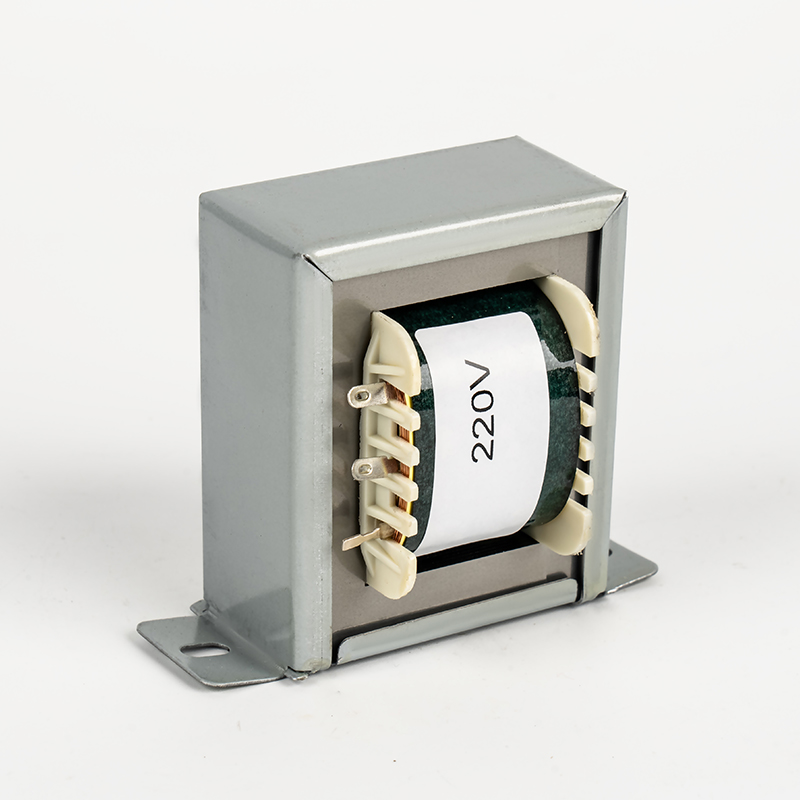
Core Losses and Stray Losses: Under high-frequency operation, the eddy current losses and hysteresis losses of the inverter transformer's core material (such as a high-quality EI core) increase significantly.
If the high-frequency effect is not adequately considered in the design, or if the selected core material does not have sufficient high-frequency resistance, the temperature of the core components will rise sharply, leading to localized overheating.
Insulation Aging and Partial Short Circuits: With prolonged use, the winding insulation layer may age or suffer localized damage, leading to inter-turn or inter-layer short circuits. The current density at the short circuit point increases dramatically, generating immense heat and causing abnormally high local temperatures in the transformer, potentially resulting in burnout.
Operating Environment and Heat Dissipation Issues
High Temperature Environment and Poor Heat Dissipation: Inverter transformers typically operate outdoors or in confined spaces. If the ambient temperature is too high, or if active/passive cooling devices such as cooling fans and heat sinks malfunction or become blocked, heat cannot be effectively dissipated, causing the overall temperature rise to exceed the design value.
Additional Losses Due to Harmonics and Magnetic Saturation: The inverter output current often contains high-frequency harmonics. These harmonics not only increase core losses but can also cause core magnetic saturation, causing the magnetic flux density to enter the nonlinear region, further exacerbating iron losses and leading to abnormally high temperatures.
Overload and Poor Electrical Connections
Overload Operation: When the inverter transformer operates under loads exceeding its rated capacity, the increased current leads to increased power losses (P=I²R), and heat accumulates rapidly. Prolonged overload operation not only reduces efficiency but can also lead to insulation breakdown.
Increased contact resistance: Poor contact at terminals or tap changers can increase contact resistance. This increased contact resistance generates concentrated heat; if the temperature is too high, it can melt or burn surrounding insulation, further damaging the transformer.


Welcome To CHUANGBIAO
Address : No.420-3, Sanbei East Road, Guanhaiwei Industrial Zone, Cixi City, Ningbo, Zhejiang, China
Contact
- Tel: +86 186 6825 0703
- Email: linjian@nbcbdz.com
About us
Products
Copyright © Ningbo Chuangbiao Electronic Technology Co., Ltd.
All Rights Reserved. EI Transformer Manufacturer


