
 English
 中文简体
中文简体Core Definition and Working Principle
A transformer is a static electromagnetic device that transfers electrical energy between two or more circuits through electromagnetic induction. It operates on the principle of Faraday's Law of Electromagnetic Induction, which states that a changing magnetic field induces an electromotive force (EMF) in a conductor.
The fundamental equation governing transformer operation is:
Vp/Vs = Np/Ns = Is/Ip
Where Vp and Vs are primary and secondary voltages, Np and Ns are the number of turns in primary and secondary windings, and Ip and Is are the primary and secondary currents. Ideal transformers achieve efficiency rates of 95-99% in power transmission applications.
Major Classification of Transformers
Transformers are categorized based on voltage levels, construction, and application purposes. The primary distinction lies between power transformers and distribution transformers.
By Voltage Level and Application
- Power Transformers: Rated above 200 MVA and 33 kV, used in transmission networks with efficiency typically exceeding 98%
- Distribution Transformers: Rated below 200 MVA and 33 kV, stepping down voltage for end-user consumption, operating 24/7 with 50-70% average load
- Instrument Transformers: Including Current Transformers (CT) and Potential Transformers (PT) for measurement and protection
- Autotransformers: Single-winding design offering 30-40% material savings compared to conventional two-winding transformers
By Construction and Cooling Method
| Type | Cooling Medium | Capacity Range | Typical Application |
|---|---|---|---|
| Dry Type | Air | Up to 30 MVA | Indoor, high-rise buildings |
| Oil-Immersed | Mineral Oil | Up to 1000+ MVA | Outdoor, substations |
| Cast Resin | Epoxy Resin | Up to 25 MVA | Harsh environments, marine |
Distribution Transformers: Specifications and Standards
Distribution transformers are the final voltage conversion stage in the power grid, typically stepping down 11 kV or 33 kV to 400/230V for residential and commercial use. These transformers are designed for continuous operation with specific efficiency requirements mandated by regulatory bodies.
Key Performance Standards
- DOE 2016 Standards (USA): Mandate minimum efficiency of 98.3% for 25 kVA units and 99.0% for 2500 kVA units
- EU EcoDesign Directive: Tier 2 requirements, effective 2021, specify maximum load and no-load losses
- Typical Ratings: Single-phase units from 5-167 kVA; three-phase units from 15-5000 kVA
Modern distribution transformers employ amorphous metal cores to reduce no-load losses by 60-70% compared to traditional silicon steel cores, resulting in annual energy savings of 500-1000 kWh per unit.
Internal Components and Construction Details
Transformer construction involves precision-engineered components working in concert to ensure efficient energy transfer and long-term reliability.
Core Components
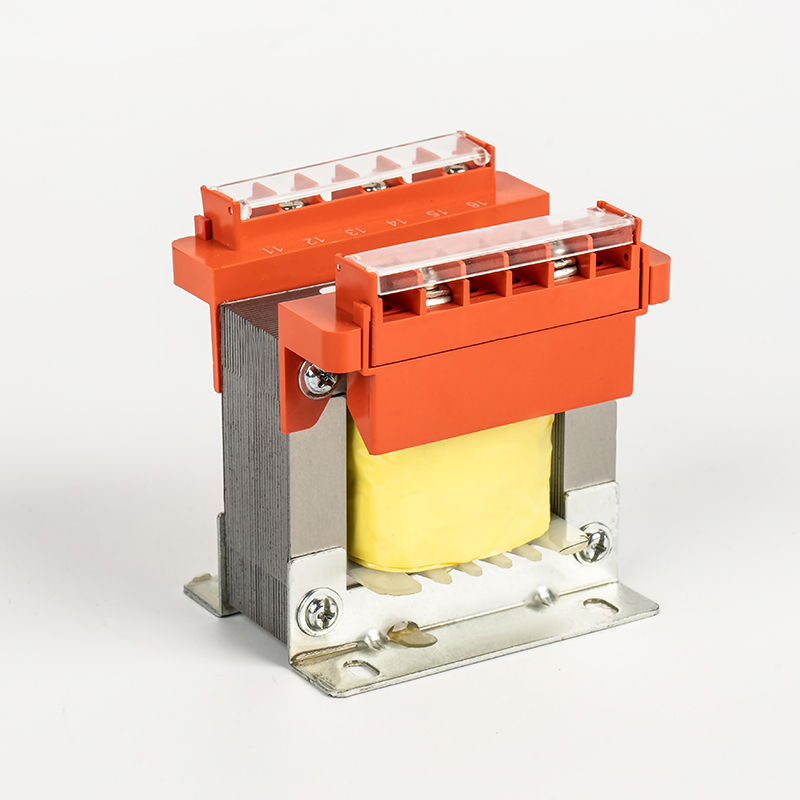
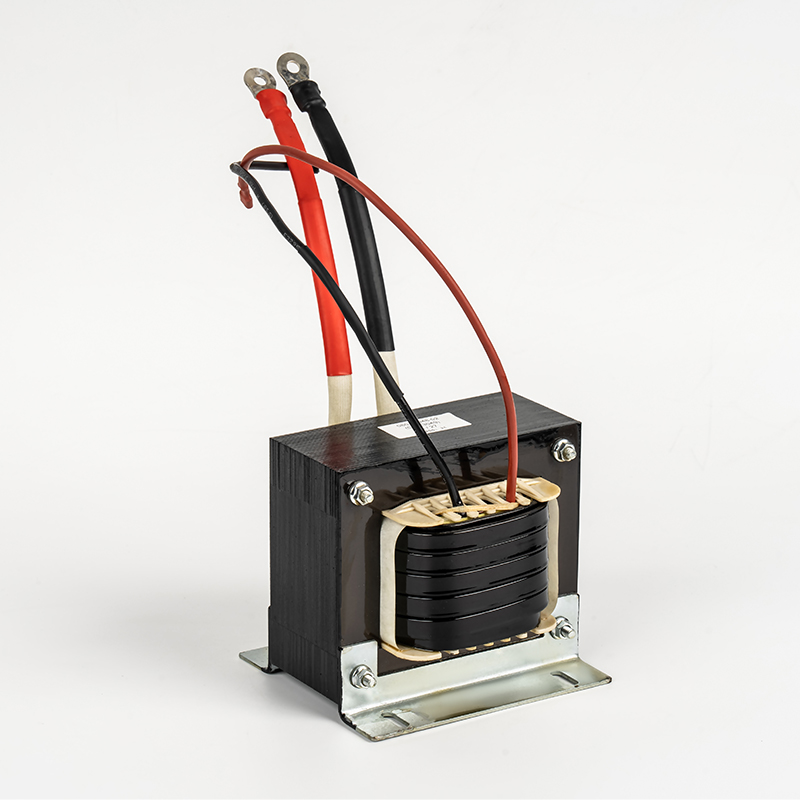
- Magnetic Core: Laminated silicon steel (0.23-0.35mm thick) with 3% silicon content to reduce eddy current losses; core loss typically 0.5-1.5 W/kg at 1.5 Tesla
- Windings: Copper or aluminum conductors; copper offers 40% better conductivity but at a higher cost; typical current density 2-4 A/mm²
- Insulation System: Kraft paper, pressboard, or Nomex; designed for 105°C to 220°C temperature classes
- Bushings: Porcelain or composite insulators rated for specific voltage levels; typical creepage distance 25-31 mm/kV
Protection and Accessory Components
- Buchholz Relay: Gas detection device for oil-immersed transformers above 500 kVA, providing early warning of internal faults
- Conservator Tank: Expansion vessel accommodating oil volume changes with temperature fluctuations (±10% volume variation)
- Pressure Relief Device: Rapid pressure release mechanism activating at 50-100 kPa above normal operating pressure
- Temperature Monitoring: RTD sensors or thermostat switches set at 90-110°C alarm thresholds
- Tap Changer: On-load or off-circuit voltage regulation, typically providing ±5% to ±10% voltage adjustment in 1.25% or 2.5% steps
Air Conditioner Transformers: Technical Specifications and FAQs
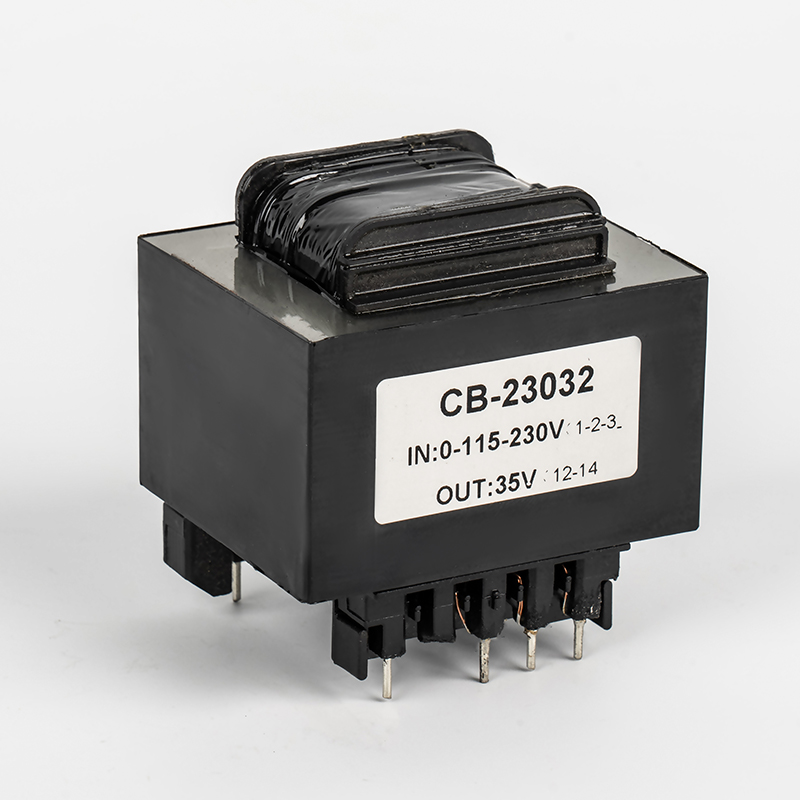
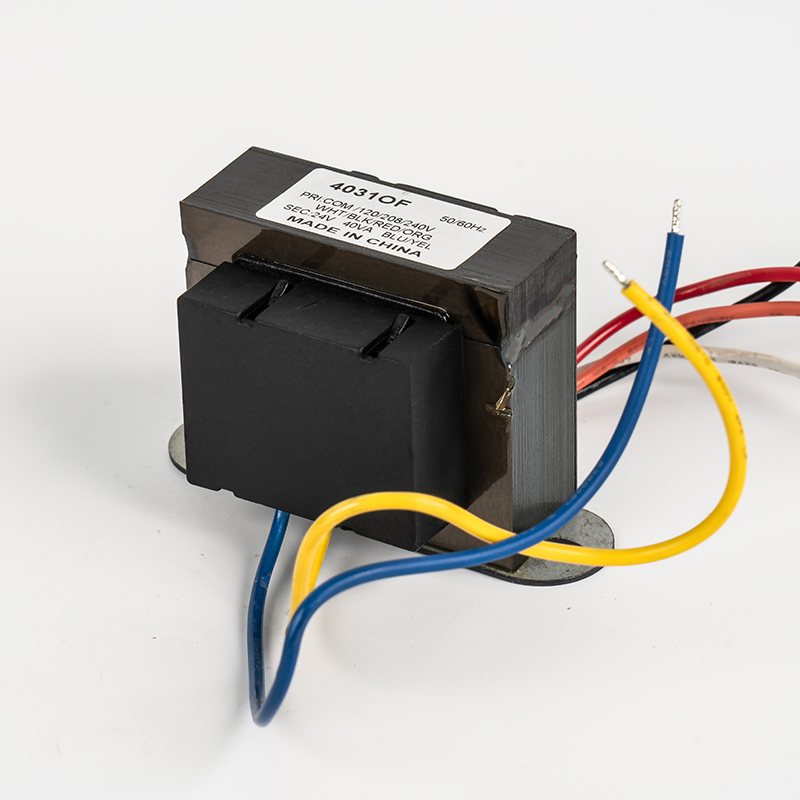
Air conditioning systems utilize specialized transformers to power control circuits, thermostats, and contactor coils. These are typically step-down transformers converting 240V or 480V to 24V AC for low-voltage control systems.
Common Technical Questions
What is the typical VA rating for AC transformers?
Residential HVAC transformers are commonly rated at 40VA, 50VA, or 75VA, while commercial units may require 100-250VA depending on the number of control devices powered.
Why do AC transformers fail?
Primary failure causes include: overheating (65% of failures), voltage surges (20%), moisture ingress (10%), and manufacturing defects (5%). Operating temperatures exceeding 80°C accelerate insulation degradation exponentially.
What is the difference between control transformers and isolation transformers in HVAC?
Control transformers prioritize voltage regulation under inrush conditions, maintaining 90-95% voltage during compressor startup. Isolation transformers provide galvanic separation with 1:1 turns ratio for safety and noise reduction.
How to size a replacement transformer?
Calculate total VA requirement by summing all load currents: Transformer VA = 1.25 × (Sum of all control device VA ratings). The 25% safety margin accommodates inrush currents from contactors and relays.
| Application | Input Voltage | Output Voltage | Recommended VA |
|---|---|---|---|
| Residential Split System | 208-240V | 24V | 40-50 VA |
| Commercial Rooftop Unit | 480V | 24V | 75-100 VA |
| Heat Pump Systems | 208-240V | 24V | 50-75 VA |
| Multi-zone Controls | 208-480V | 24V | 100-250 VA |
Physics Principles: Electromagnetic Induction in Depth
The physics of transformer operation centers on Maxwell's equations and the principles of electromagnetic induction. When alternating current flows through the primary winding, it generates a time-varying magnetic flux Φ in the core.
The induced EMF follows the equation: E = -N × dΦ/dt, where the negative sign represents Lenz's Law. For sinusoidal excitation at frequency f, the RMS voltage relates to maximum flux density Bmax by: V = 4.44 × f × N × Bmax × A, where A is the core cross-sectional area.
Core losses consist of hysteresis losses (Ph ∝ f × Bmax^1.6) and eddy current losses (Pe ∝ f² × Bmax²). Modern grain-oriented silicon steel reduces these losses to 0.8-1.2 W/kg at 1.5 Tesla and 50 Hz.
Copper losses (I²R) in windings typically account for 50-70% of total losses at full load, while stray losses from leakage flux contribute 5-15%. The total loss determines the transformer's temperature rise, with oil-immersed units limited to 65°C rise over ambient for standard insulation classes.